Copenhagen neighbourhood guide
Christianshavn, Copenhagen: canals, church spires and counterculture
A water-led quarter of reclaimed marsh where Michelin stars, houseboats and Christiania share the same slow, slightly scruffy island air.
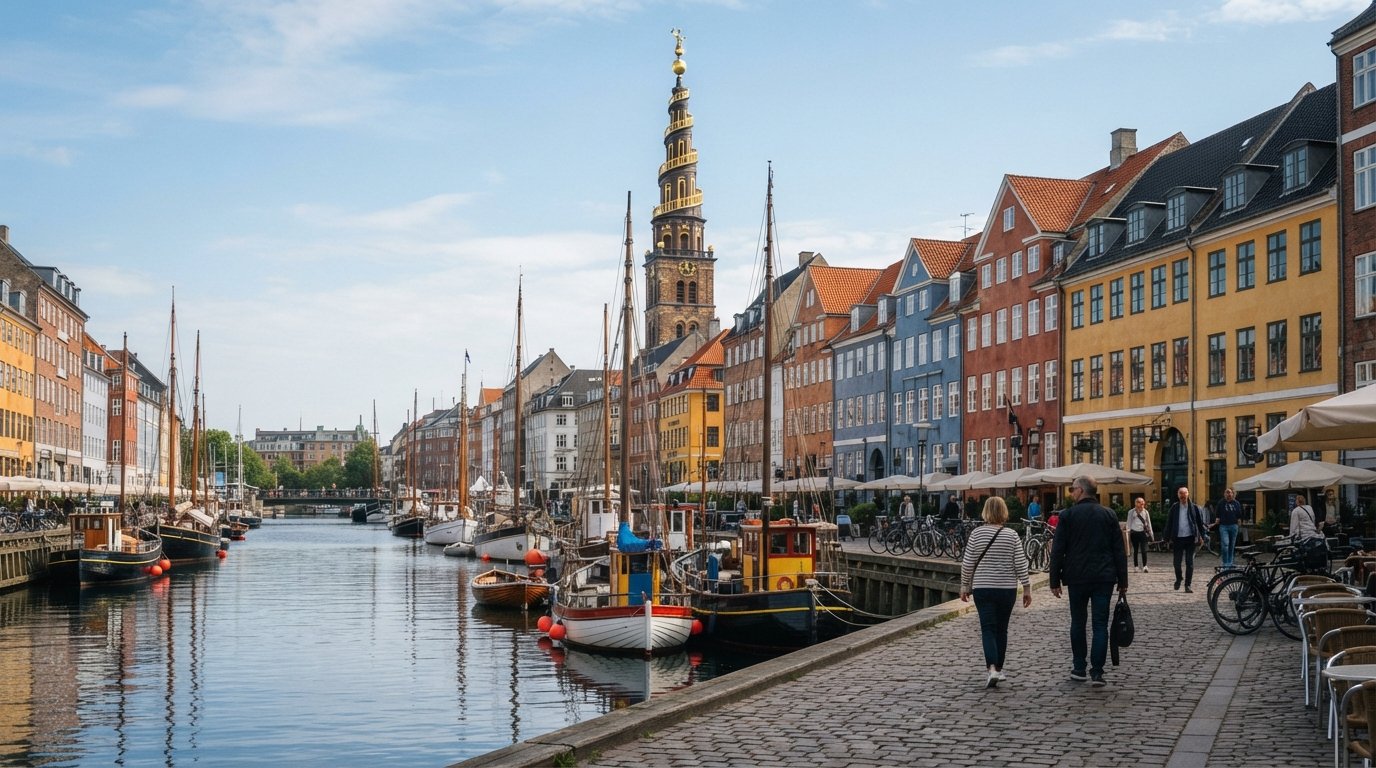
Cross Knippelsbro from the parliament side and Copenhagen changes register within a hundred metres. The traffic falls away, the canal opens up, and suddenly there are tarred wooden boats, gabled houses and the black-and-gold corkscrew of Vor Frelsers Kirke leaning over the rooftops like it owns the weather. Christianshavn is an island quarter built on reclaimed marsh, and it still behaves like one: water first, streets second, and a pleasing refusal to hurry.
What Christianshavn is known for
Christianshavn is Copenhagen's canal district, but that phrase barely covers the mood of it. Christian IV laid the neighbourhood out in the 1600s as a fortified merchant town in the Dutch style, on land dredged up from the harbour, and the bones remain legible if you know where to look. The two main streets still make the geography plain: Overgaden Oven Vandet, the street above the water, and Overgaden Neden Vandet, the street below it, running on either side of the canal like a pair of tidy margins.
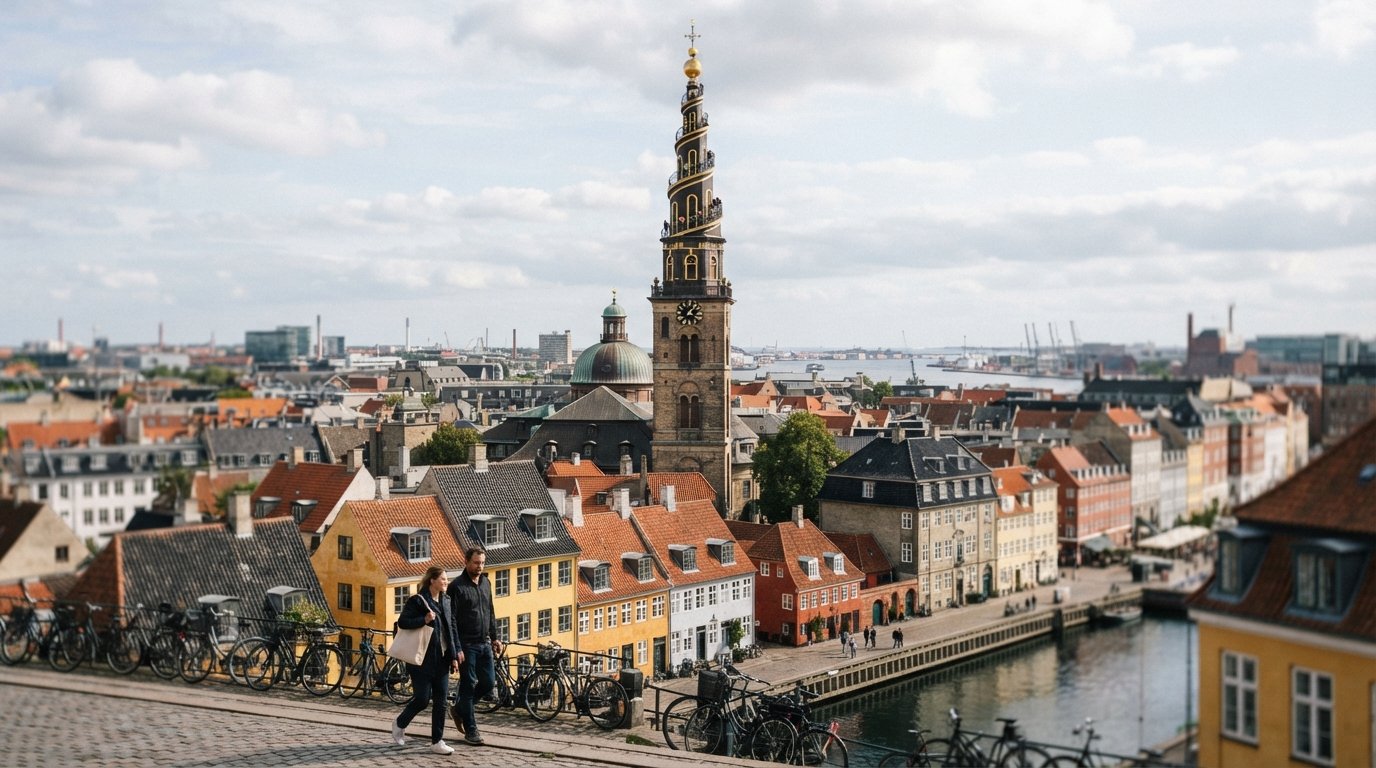
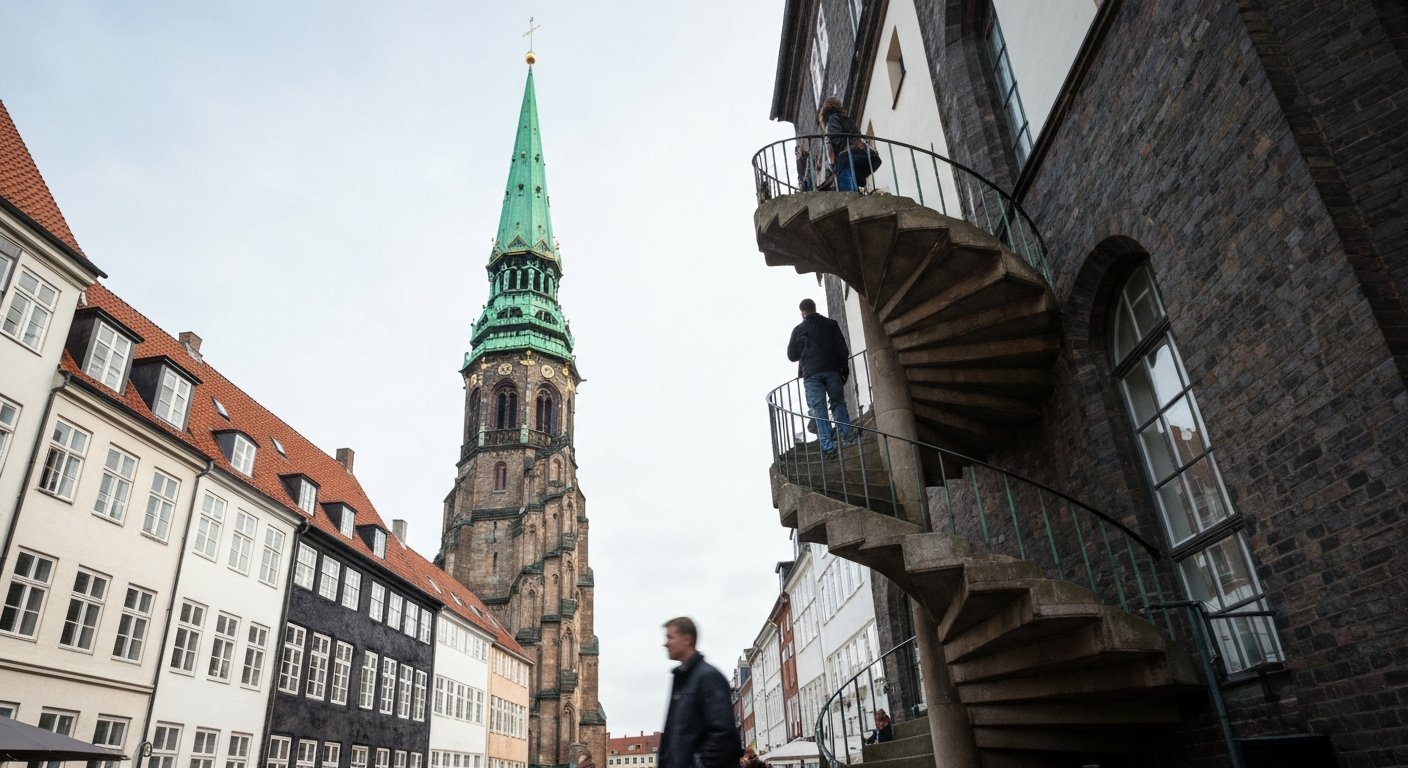
The quarter's roofline is ruled by Vor Frelsers Kirke, whose external spiral staircase wraps around the gilded spire and ends in a golden globe. It is the sort of landmark that turns up in every skyline shot for a reason; from almost anywhere on the island, your eye eventually drifts back to it.
The other name that defines Christianshavn is Freetown Christiania, the self-governing community founded in 1971 in abandoned military barracks. It is still the district's counterweight to all that polished water and old brick: murals, workshops, lakeside paths, live music and a stubbornly alternative pulse. The easy shorthand for Christianshavn is true enough to be useful: canals, a leaning church spire, a hippie enclave and world-class food. What matters is that it all sits together without seeming to ask permission.
That mix is the point. You can stand on a canal edge with your feet dangling, watch cyclists cross the bridges with children in cargo bikes, and then turn a corner and find a room that once held Noma. Christianshavn feels like a small Dutch port town that drifted into central Copenhagen and decided to stay. It rewards wandering rather than ticking things off, and that is a very Danish kind of generosity.
Where to eat & drink
For a neighbourhood this compact, Christianshavn punches absurdly high at the table. The headline act is Kadeau Copenhagen on Wildersgade, a three-Michelin-star restaurant in the 2026 Nordic guide and a Green Star holder too. Its cooking is hyper-seasonal and built around Bornholm produce, split into summer and winter seasons, which is exactly the sort of disciplined seriousness that makes a special-occasion booking feel properly earned. This is not a walk-in whim; it is months-ahead territory, and it knows it.
A short walk away on Strandgade, Barr occupies the waterfront room that used to be Noma. The room matters, of course, but so does the mood: elevated North Sea comfort food, twenty-odd craft beers on tap, and prices that sit well below the pedigree hanging in the air. Frikadeller, a proper schnitzel, Belgian-style waffles with smoked marrow — the menu reads like someone took the coastal pantry seriously and then relaxed about it. Next door in the same complex, Popl serves the famous Noma burger for anyone who wants a little lineage without the full tasting-menu commitment.
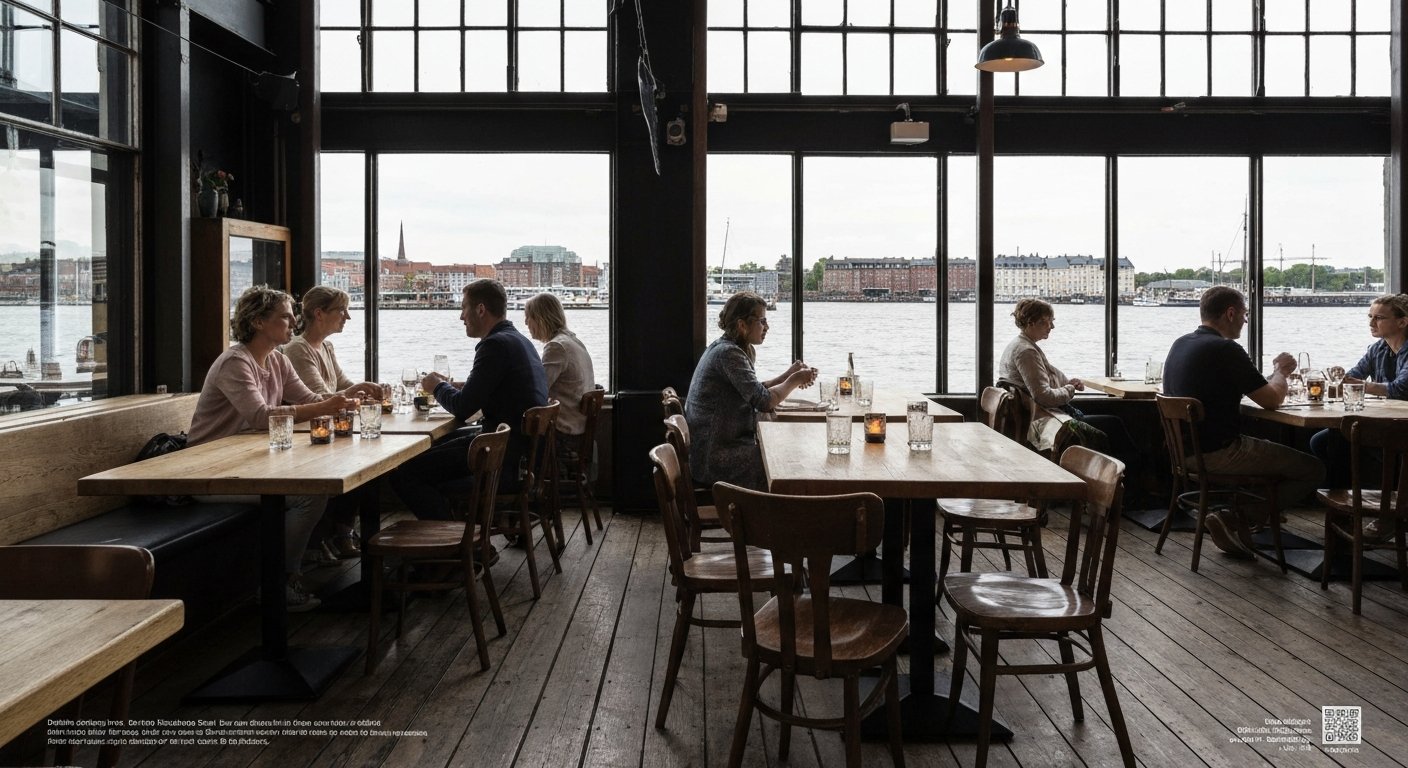
Over on Krøyers Plads, Nærvær does two jobs at once and does them well. The wine bar has one of the largest by-the-glass lists in the city, while the tiny gourmet room seats around ten in a warm oak interior by Norm Architects. It is one of those places that understands restraint: the harbour view is already doing part of the work, so the room doesn't need to shout. Nærvær is also the sort of bar where an evening can begin as a glass of white and become a very decent argument for staying put.
No. 2, on Nicolai Eigtvedsgade facing the Black Diamond and the harbour, is AOC's more relaxed Nordic brasserie — seasonal, unbuttoned and more affordable, which in Copenhagen terms means it does not require a minor financial reorganisation. For canal-side casual, Café Wilder on the corner of Wildersgade has been a local institution for decades, with French- and Italian-leaning bistro plates and the sort of corner-table ease that makes you linger longer than planned. It is one of those places people return to because it behaves like a neighbourhood room rather than a concept.
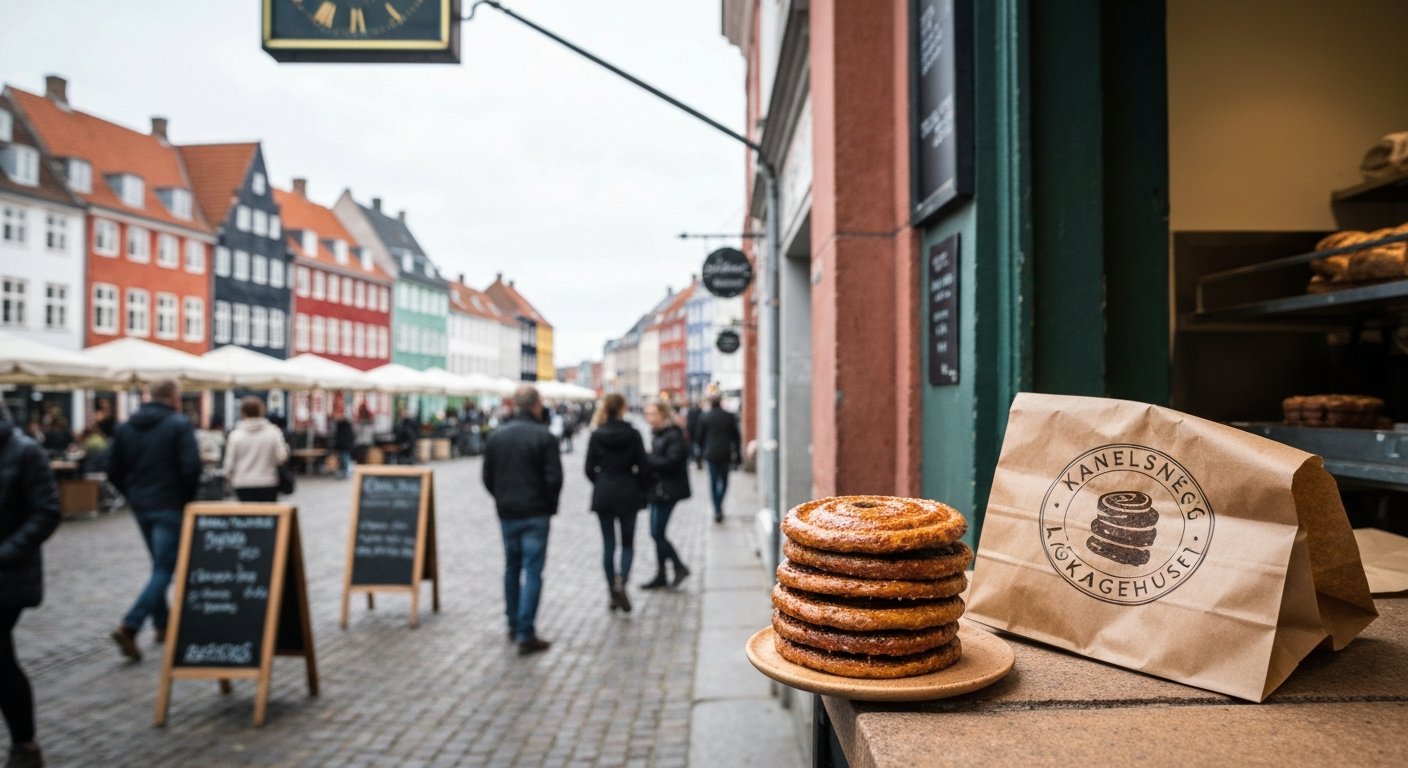
Then there is Lagkagehuset on Christianshavns Torv, the original flagship of the chain, where a kanelsnegl is the obvious order and the right one. It is a bakery with a lineage, not a shrine, which is why it still feels useful. And if you want a drink with actual history, Eiffel Bar on Wildersgade is the old sailors' tavern that has poured beer on this spot since the 1730s. Cheap beer, cut-glass Parisian mirrors, no pretension: the room has survived long enough to know exactly what it is.
Going out
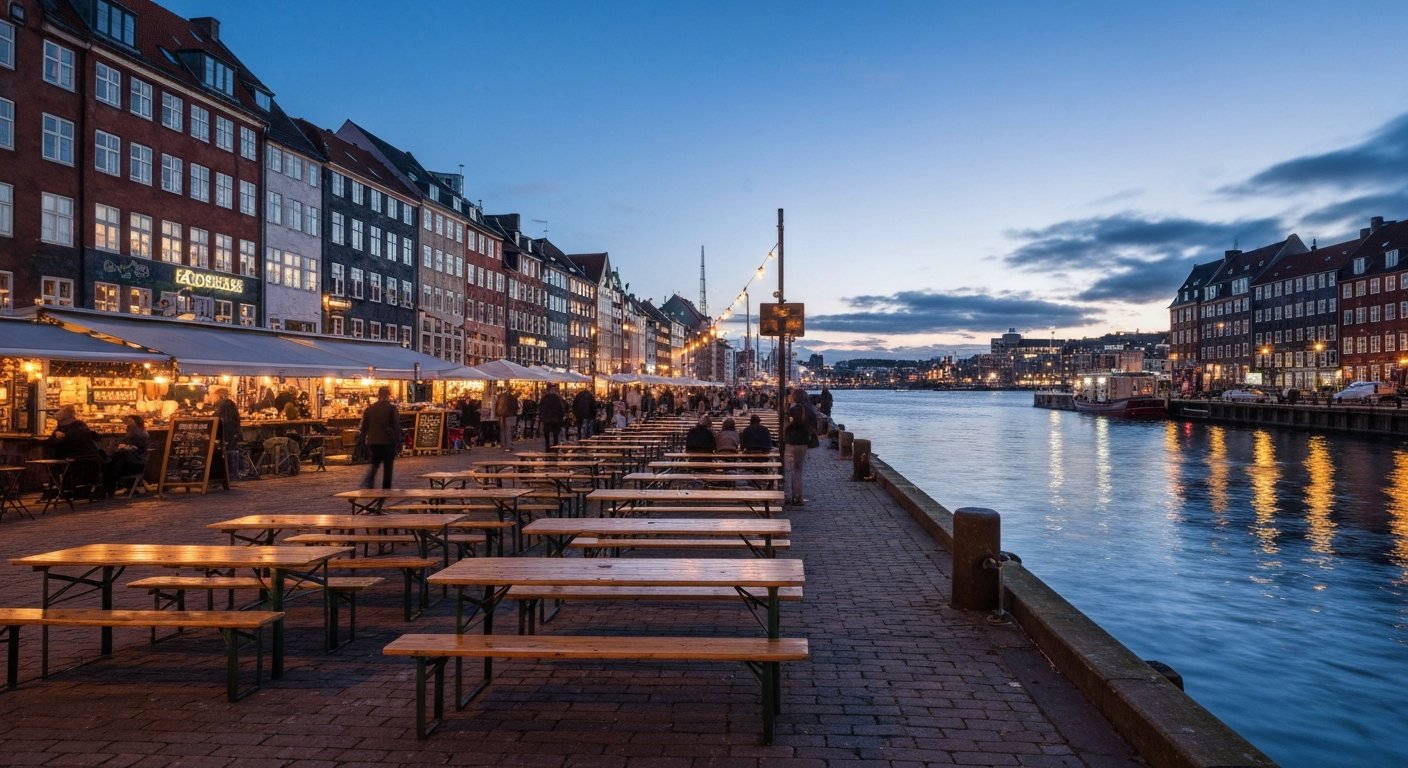
Christianshavn does not pretend to be a late-night district in the club sense, and that is part of its charm. If you want big rooms and 4am sets, you go elsewhere. What the neighbourhood offers instead is the long, good evening: a beer that turns into two, a waterfront table, a band if you're lucky, and no sense that the night is trying to sell you anything.
Eiffel Bar is the classic move. It is a genuine old dive, full of grizzled regulars, students and curious visitors, and the mirrored walls make the whole place feel slightly more Parisian than it has any right to. The appeal is not mystery; it is continuity. The bar has been here since the 1730s, and the room still has the blunt confidence of somewhere that has seen every kind of night and is unimpressed by most of them.
Nærvær's bar on Krøyers Plads is one of the city's better by-the-glass destinations and stays relaxed late, which makes it an easy place to drift into after dinner or before one. Down by the water near the Inner Harbour Bridge, Broens Gadekøkken keeps its stalls and bars open into the evening in season, with harbour views and communal tables. It is a good first stop, a good cheap stop, and a good low-effort stop — the sort of place where you can arrive hungry, eat something decent, and never have to perform enthusiasm about it.
The other axis is Christiania. Its bars and music venues give the district its alternative after-dark edge, with live music, smoky rooms and a crowd that spans decades. It is less about the conventional night out and more about grabbing a beer and listening to a band while the evening loosens around you. The old cannabis trade on Pusher Street was dismantled by residents in 2024, and the area has been repaving and reinventing itself since; the music and community spaces remain the draw.
Things to do
Start with the climb everyone comes for: Vor Frelsers Kirke. Entry to the church is free, but the tower needs a paid timed ticket, and you should book ahead because it sells out and closes in high wind or rain. There are 400 steps in all, the last 150 on the external spiral staircase that corkscrews around the outside of the gilded spire. At around 90 metres up, the view is one of the best 360-degree panoramas in the city, provided you are not inclined to go weak at the knees.
Freetown Christiania is the other essential. Walk the lakeside paths, look at the murals, pass the workshops and communal buildings, and stop for something to eat or a coffee if the mood takes you. It is green, walkable and unlike anywhere else in Copenhagen, but it deserves ordinary respect: follow the local signage, and remember the no-photography zones.
For the water itself, rent a GoBoat — a solar-powered picnic boat you drive yourself with no licence — or a kayak and paddle the canals under the low bridges. Christianshavn makes sense from the water in a way that landlocked districts never can; the whole island was built around this relationship. The historic Christianshavns Bådudlejning, near the metro, has been here since the 19th century and is a lovely place to launch or just sit with a coffee and watch other people do the work.
On the culture side, Overgaden – Institute for Contemporary Art puts on ambitious rotating shows and has free entry, while Nordatlantens Brygge on Strandgade celebrates Greenlandic, Faroese and Icelandic art and culture in a beautifully converted warehouse. If you prefer your exercise to be low-grade and scenic, the grassy ramparts of Christianshavns Vold offer a quiet green loop around the island's edge.
Don’t miss in Christianshavn
The spiral spire of the Church of Our Saviour.
Freetown Christiania's self-built, eccentric woodland houses.
Kayaking through the quiet residential canals.
Shopping
Christianshavn is not a shopping-street neighbourhood, and thank goodness for that. There is no Strøget logic here, no need to sprint from one flagship to another. What you get instead is small and local. Torvegade, the main road running from the metro across the island, holds the everyday shops, a couple of supermarkets and bakeries, and it leads you to Christianshavns Torv, where the original Lagkagehuset sits.
The side streets around the canals are the more rewarding browse. Old warehouse ground floors have become design studios, ceramicists and galleries, the sort of places that are worth a wander even when you are not in a buying mood. Christianshavn rewards the eye more than the basket.
The most enjoyable market-style stop is Broens Gadekøkken by the Inner Harbour Bridge, a curated street-food market with a rotating cast of well-regarded city vendors. It is open in the warmer months and works equally well at lunch and early evening. Inside Nordatlantens Brygge there is also a small shop with North Atlantic craft, design and books worth a look after the exhibitions.
Where to stay in Christianshavn
Christianshavn is a quiet, characterful base that still feels genuinely central. You are one metro stop or a short walk from the old town, but you sleep beside canals rather than traffic. That suits couples and slower travellers best. It is less ideal if you want big-brand hotels on tap or a budget-chain safety net; this is a place of boutique stays, guesthouses and canal-front apartments.
The clearest local option is Kanalhuset, a small boutique hotel in a 1754 building right on the canal, with a dozen canal-level rooms plus serviced apartments and a much-loved communal dinner served at long tables. It is as much a neighbourhood gathering as a hotel restaurant, which feels very Christianshavn: practical, social, and just a little bit proud of itself without becoming smug.
For location, the sweet spot is the stretch around Overgaden Oven Vandet and Overgaden Neden Vandet flanking the main canal, or the streets near Christianshavns Torv for the metro. Krøyers Plads is newer and smart, with quick foot access straight into Nyhavn. Budget-wise, the district reads mid-range to upper, because the setting carries a premium and the area is spared the tourist churn of the centre.
Where to stay here
Hotels in Christianshavn
Our best-rated stays in this neighbourhood. Prices are approximate “from” rates — confirmed at the provider when you continue. We may earn a commission if you book through our partners — at no extra cost to you.
 In this area
 In this area
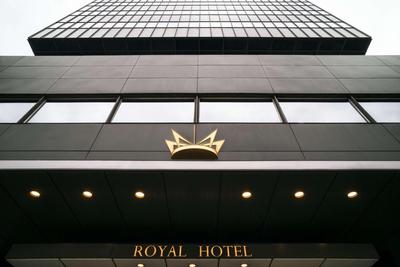
Radisson Collection Royal Hotel, Copenhagen
 In this area
 In this area
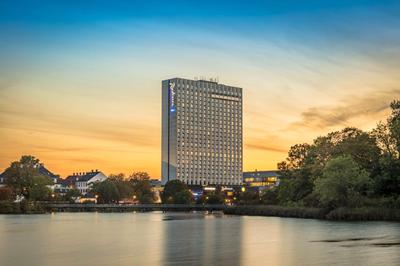
Radisson Blu Scandinavia Hotel, Copenhagen
 In this area
 In this area
 In this area
 In this area
 In this area
 In this area
 In this area
 In this area
Getting around
Christianshavn is compact and made for walking and cycling. Everywhere on the island is within a ten-to-fifteen-minute stroll, and the bridges make the geography feel pleasantly simple. The hub is Christianshavn metro station on Christianshavns Torv, served by the M1 and M2 lines in fare zone 1. It is a single stop under the harbour to Kongens Nytorv and the old town, and the metro runs 24 hours.
On foot, cross Knippelsbro to reach Slotsholmen and the parliament, or take the pedestrian-and-cycle Inderhavnsbroen straight into Nyhavn, about a ten-minute walk from the heart of Christianshavn. The bright yellow harbour buses stop nearby and run on ordinary transit tickets, making a scenic way up and down the waterfront. For the airport, the M2 from Christianshavn runs directly to Copenhagen Airport in roughly 15 to 20 minutes, no changes. As everywhere in Copenhagen, a rented bike is the most local way to get about; the bridges and canal-side lanes are flat and easy.
Good to know
Christianshavn — your questions
Is Christianshavn a good area to stay in Copenhagen?
Yes, especially for couples and slower travellers. It is quiet, canal-side and full of character, yet only a single metro stop or short walk from the old town, with a direct metro line to the airport. The trade-off is fewer big-brand and budget hotels; expect boutique stays like Kanalhuset, guesthouses and canal-front apartments at mid-range to upper prices.
Is Christianshavn safe, including Christiania?
Christianshavn is generally calm and safe to walk day and night. Freetown Christiania is also fine to visit if you follow the rules, respect the no-photography zones and use normal big-city awareness after dark. The old cannabis trade on Pusher Street was dismantled by residents in 2024.
What's the must-do in Christianshavn?
Climb the external spiral spire of Vor Frelsers Kirke for the view, booking a timed tower ticket in advance because it sells out and closes in bad weather. Pair it with a wander through Freetown Christiania and, if the mood is right, a slow boat trip on the canals.
Is Christianshavn better for dining or sightseeing?
It does both well, but the dining is unusually strong for such a small district. Kadeau, Barr, Nærvær and No. 2 make it a serious food stop, while the church spire, Christiania and canal walks give it plenty to see as well.
Gallery