The Copenhagen issue
Jump In: Copenhagen's Harbour Baths and the City That Swims in the Middle of Town
A calm, neighbourhood-by-neighbourhood guide to Copenhagen's free harbour baths — where to swim laps, where to picnic, and where to book a wood-fired sauna for the group.
By Astrid HaugenCopenhagen neighbourhood by neighbourhood, on foot and by bike
Copenhagen is one of the very few capital cities where you can close a laptop, cycle ten minutes, and drop straight into the harbour that runs through its middle. The water is clean enough to swim in — the result of decades of unglamorous engineering rather than luck — and on a warm afternoon in 2026 half the city seems to be doing exactly that: teenagers bombing off pontoons, office workers stripped to swimwear on their lunch break, families staking out a patch of grass. What follows isn't a list of postcard views. It's a guide to where you actually get in, sorted the way you'd plan a day: by neighbourhood, with an honest word on which spots suit a crowd and which reward you for turning up alone at eight in the morning.
A note before you pack a towel: nearly all of these are free, unstaffed public bathing zones. There's no door policy and no booking — you just walk down the steps. That openness is the whole charm, and also the catch. On the three or four genuinely hot days Copenhagen gets each summer, the central baths fill by mid-morning. The trick isn't finding a secret spot; it's knowing which of the fourteen or so official zones matches your morning.
Start where it started: Islands Brygge
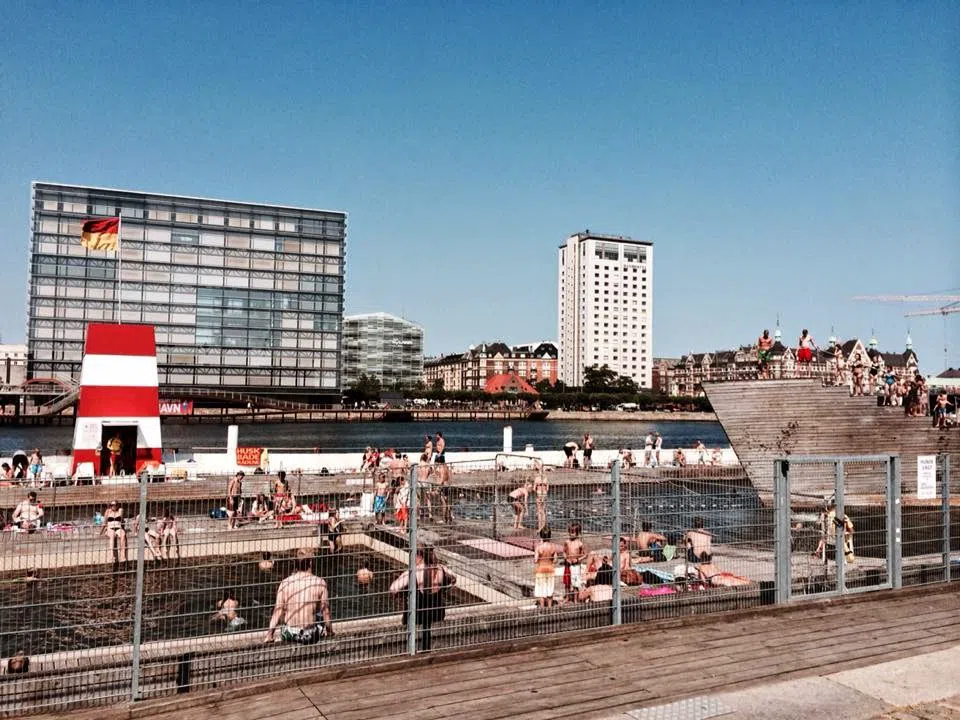
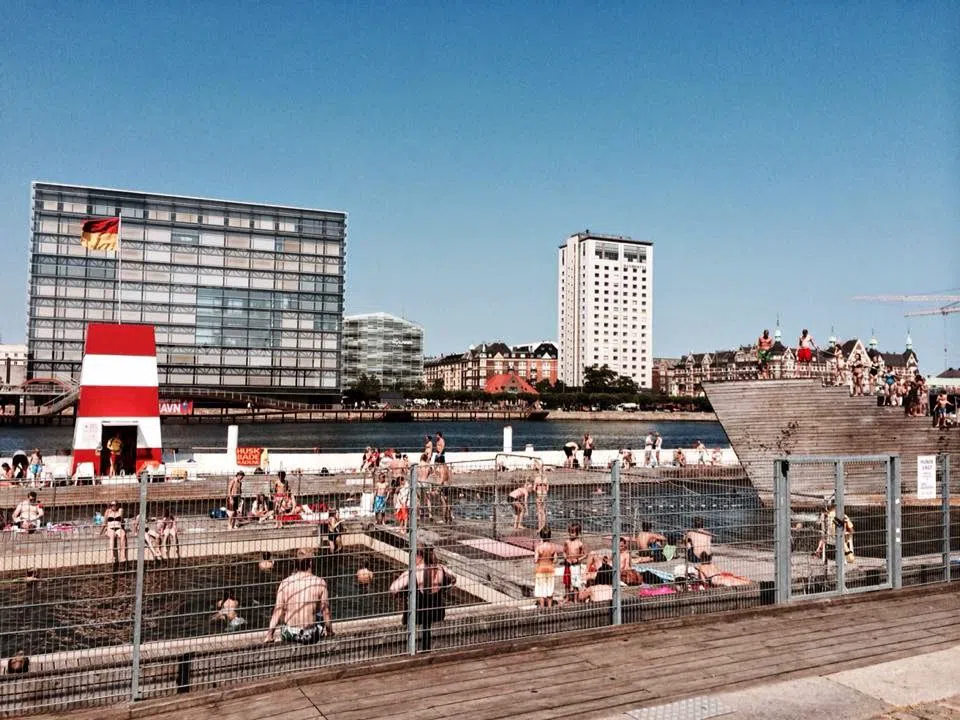
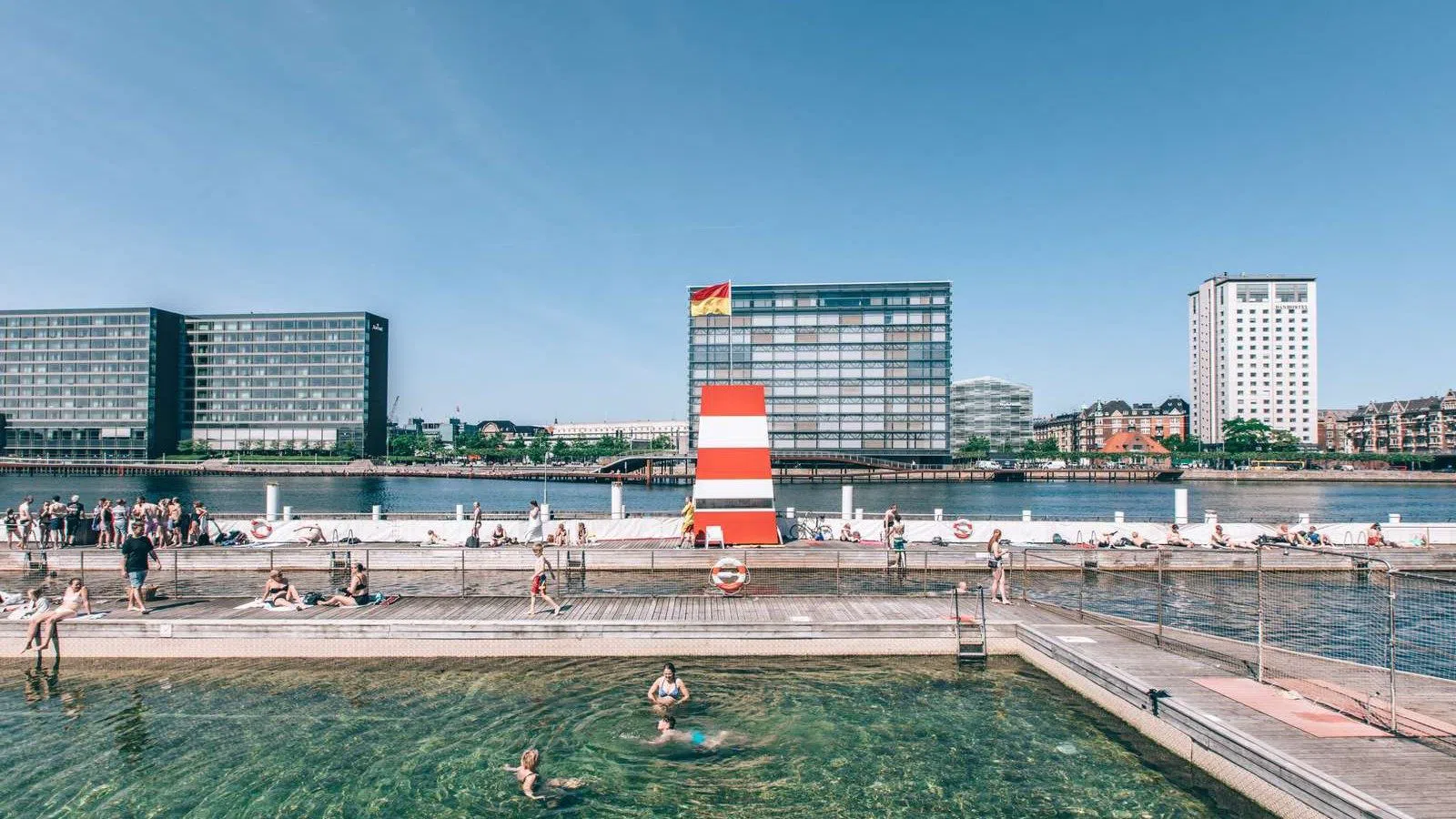
Everything you've seen in a photograph of Copenhageners swimming in their own harbour was probably shot at Islands Brygge Havnebad (Islands Brygge). It's the original and still the most famous — a run of pools and pontoons set into the water with the city skyline behind, lifeguarded from 10am to 6pm through the summer season. Entry is free, there's no door policy, and it's genuinely group-friendly, which is precisely why it gets mobbed. If you're arriving with more than a couple of people on a sunny day, come before 11am or accept that you'll be sharing every ledge. The grass bank above the water is as much the point as the pools themselves; people come to lie about as much as to swim.
When the main bath is heaving, walk five minutes south along the waterfront to Halfdansgade Badezone (Islands Brygge). This is the locals' overflow: quieter, with grass to spread a picnic on and none of the queueing-to-jump energy of its famous neighbour. One serious caveat, though — the water here is deep, around 8 metres, with no shallow end to speak of. It's a fine spot for confident adult swimmers and a poor one for small children or anyone nervous in open water. Read it as the grown-up annexe to Islands Brygge rather than a family alternative.
Plan your Copenhagen trip
Live prices from our booking partners.
Free cancellation on many rooms. We may earn a commission when you book.
Quick central dips between the sights
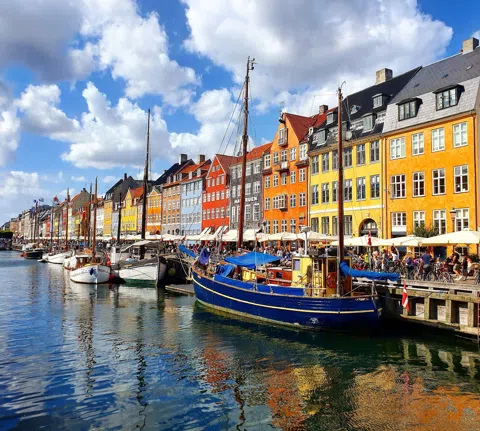
If you're mid-sightseeing and just want to cool off, the most central splash of all is Havnegade Dyppezone (Nyhavn). It sits right by the postcard-coloured houses, and it's small — a modest pool built for a quick refreshing dip rather than a proper swim. That scale makes it perfect for a solo traveller or a couple breaking up a walk, and wrong for a big group; there simply isn't room for a party here, so don't plan your afternoon around it.
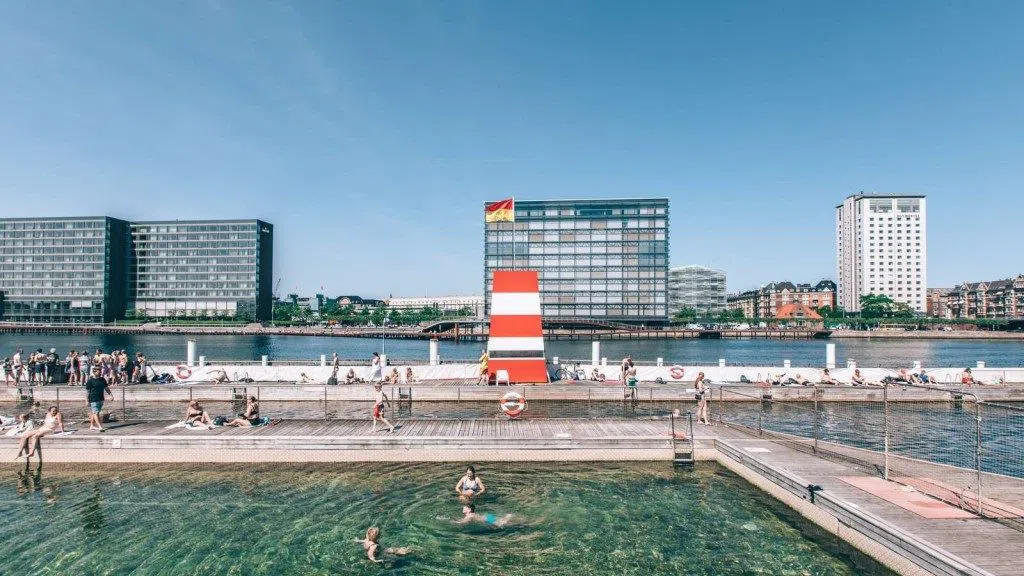
A short ride down the harbourfront brings you to Kalvebod Bølge (Kalvebod Brygge), the sculptural wooden 'wave' that zigzags out over the water near the central station. It doubles as an event space, draws a younger crowd, and on summer evenings you'll often find live DJs and a sociable, slightly boisterous scene. Come here for the atmosphere and a lively group dip, not for lap swimming — the layout is about hanging out over the water, not clocking distance.
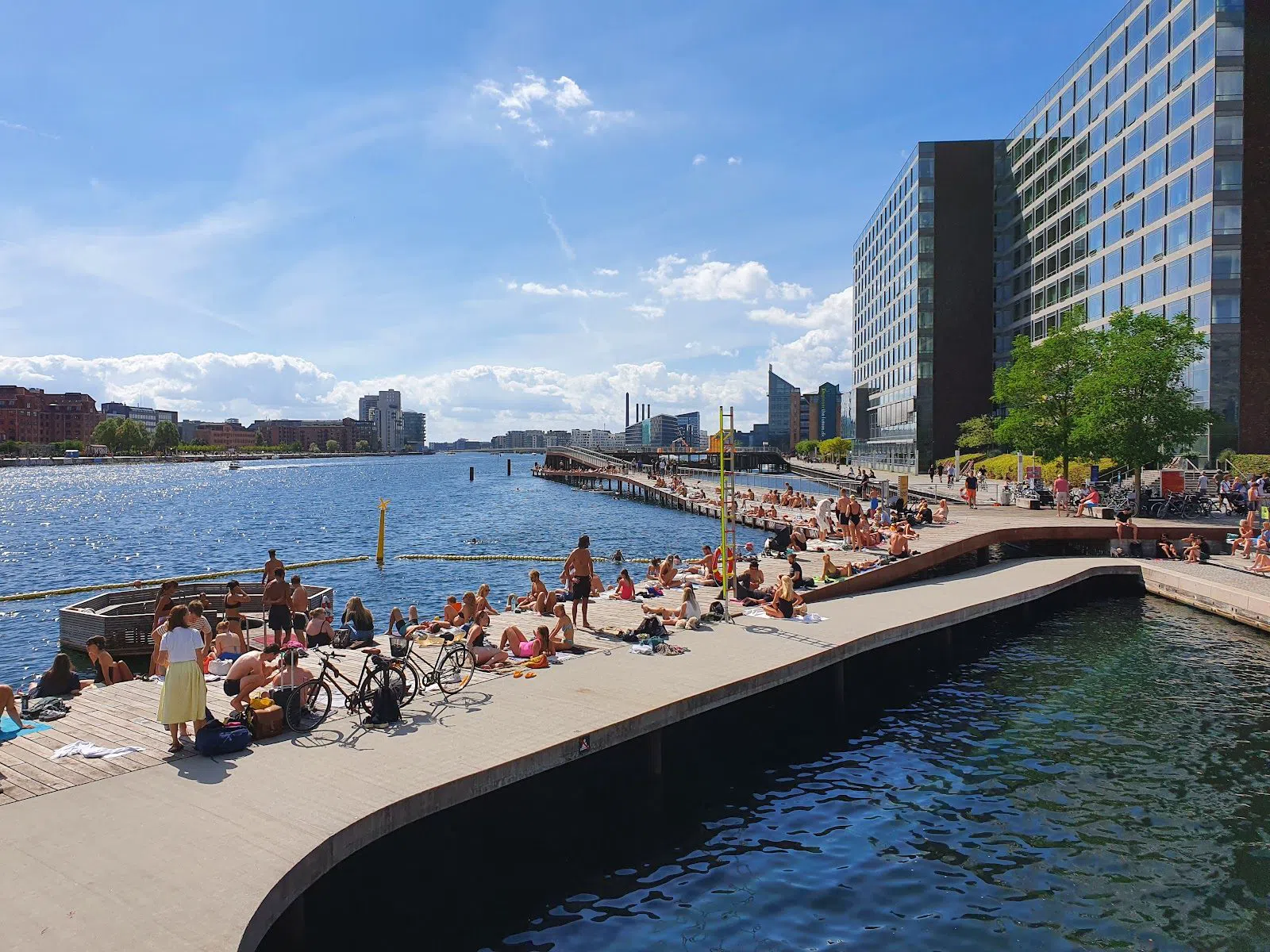
Further along, tucked beside the Fisketorvet shopping centre and its metro stop, Fisketorvet Havnebad (Fisketorvet) is the easy-access option. It's lifeguarded in season, free, and feels calmer and more modern than Islands Brygge. Because it's a straight walk from a metro station and a mall, it's an unfussy choice for a group that's arriving from different corners of the city and wants somewhere simple to converge.
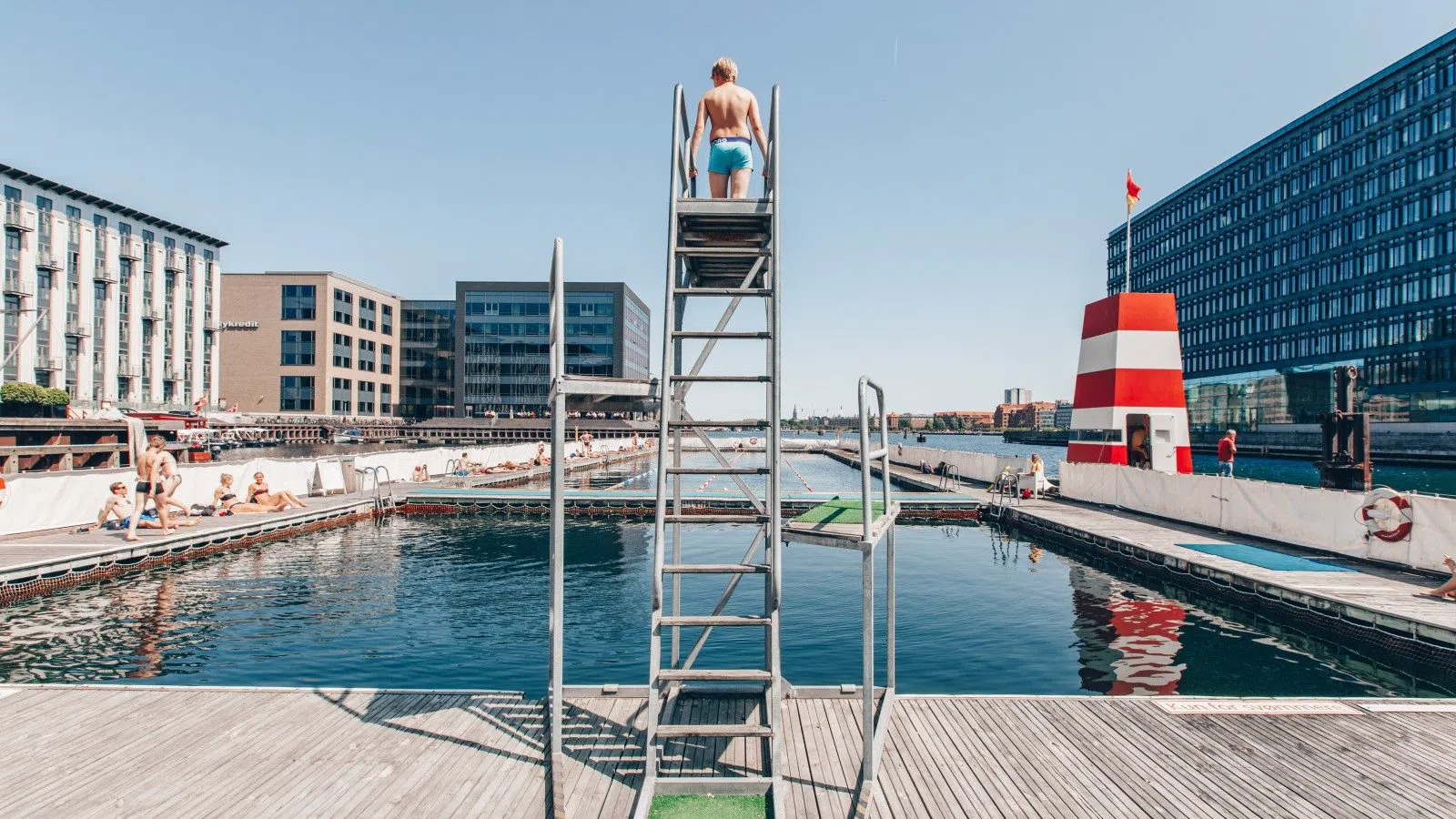
South into Sydhavn: room to actually swim
The central baths get the fame; the southern districts get the space. If your idea of a good swim involves more than three strokes before you hit someone's elbow, head down to Sluseholmen and Sydhavn, roughly 15–20 minutes by bike from the centre.
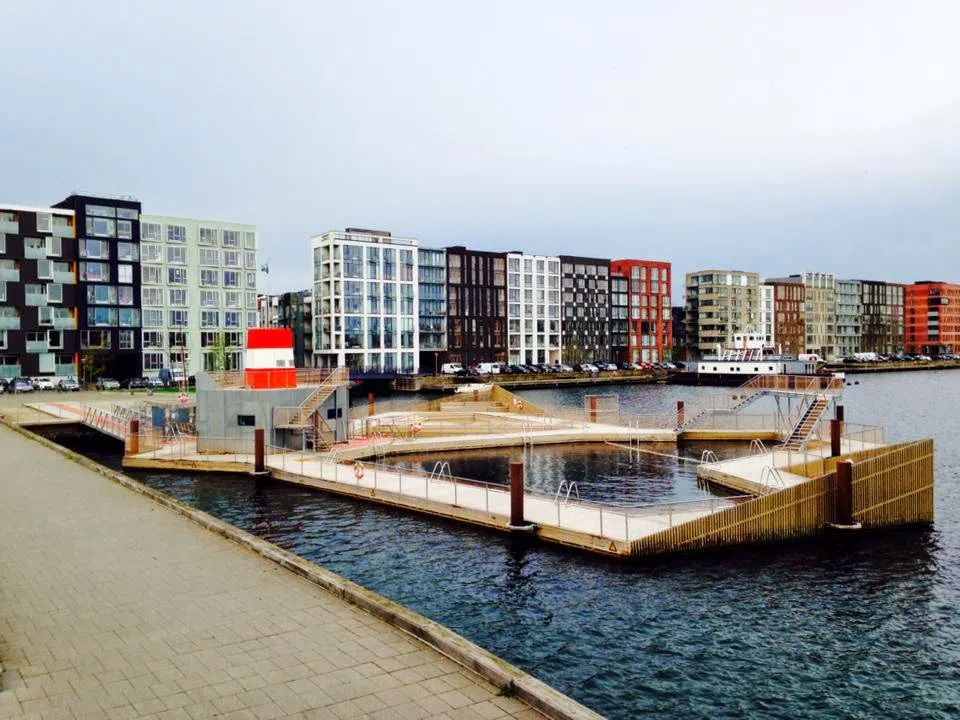
Architecturally, the loveliest bath in the city is Sluseholmen Havnebad, known as the Coral Bath (Sluseholmen). It's a sheltered lagoon design — calmer water, ringed and protected — which makes it a reassuring place for less confident swimmers and a comfortable one for groups who want elbow room away from the crush. It's usually quieter than anything central, and worth the ride on its own.
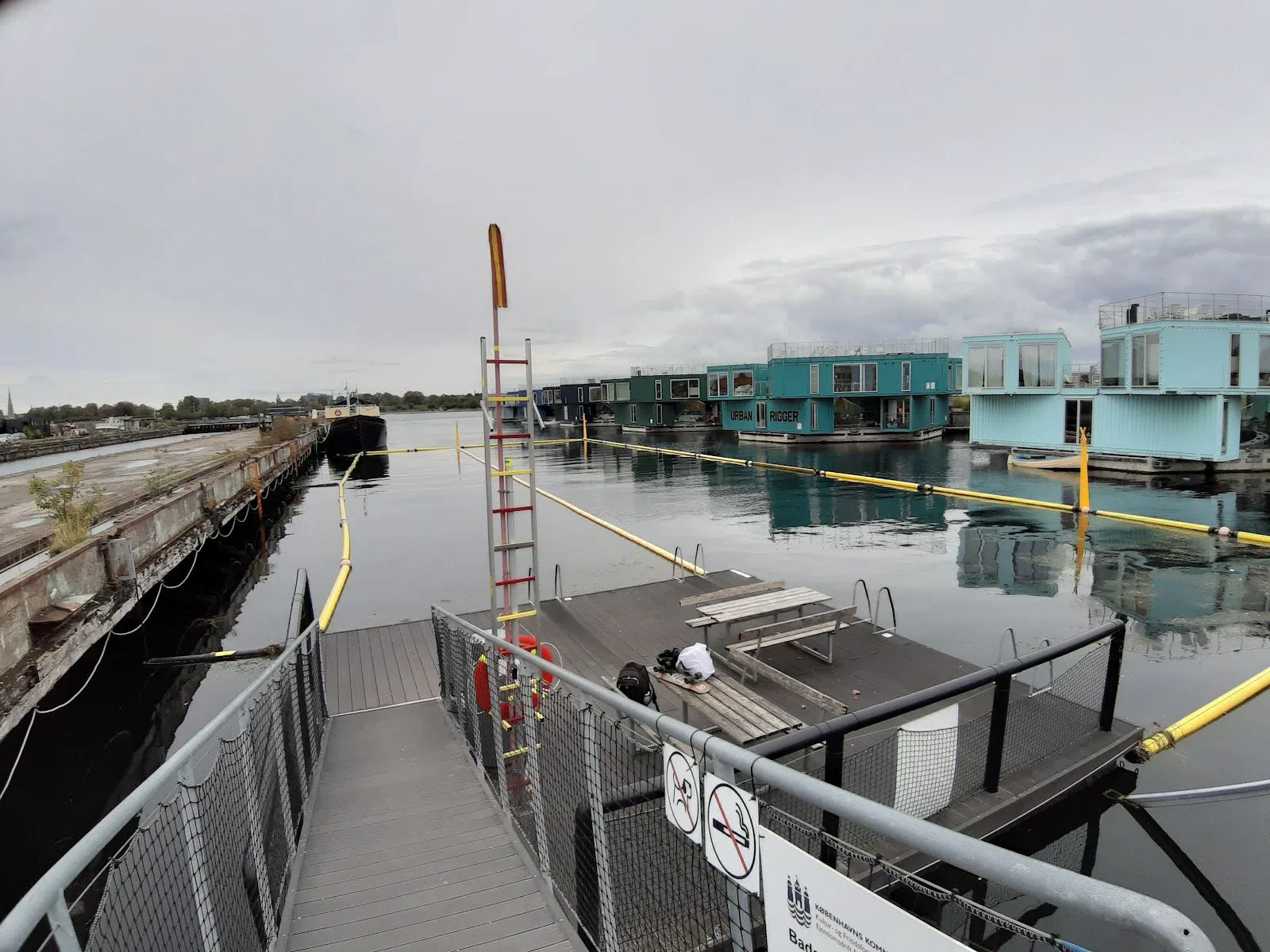
A few steps on is my pick for anyone who wants to swim rather than paddle: Vandtrappen, the Sluseholmen Water Stairs (Sluseholmen). At 100 metres it's Copenhagen's longest single swimming stretch, edged by wide amphitheatre-style wooden steps that make ideal group seating along the water. It stays uncrowded, and it's the rare harbour spot where you can settle into a proper rhythm and cover distance without weaving around sunbathers.
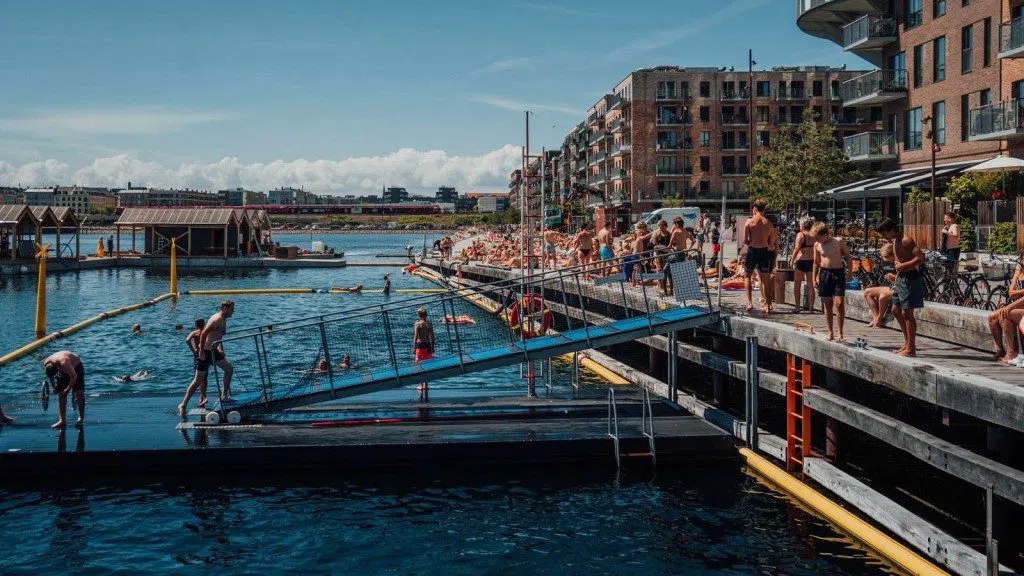
Still in the neighbourhood, Teglholm Brygge Badezone (Teglholm) opened in 2022 as fast-growing Sydhavn filled in around it. It's a low-key neighbourhood bath with a café and benches out over the water — the sort of comfortable, unhurried spot that suits a group wanting somewhere to swim and then sit for an hour without moving on.
The most off-the-map choice down here is Byskoven Badezone (Sydhavn), which opened in 2023 and trades the social scene entirely for nature and solitude. It's free, quiet, and — usefully — has a wheelchair-accessible ramp into the water, which is far from universal at these zones. Come if what you want from a swim is calm and greenery rather than a crowd; skip it if you're chasing atmosphere.
Nordhavn's boardwalk scene
On the opposite side of the harbour, in the redeveloped docklands of Nordhavn, Sandkaj Havnebad (Nordhavn) is the trendy one. It's a 60-metre bathing stretch with a genuine beach-club feel — a broad boardwalk where young locals sprawl, dangle their feet, and treat the whole thing as a place to be seen as much as to swim. Crucially, it's open year-round rather than just for the summer season, so it's your reliable option in the shoulder months when the lifeguarded central baths have shut for the year. Bring a group that wants a social day out; it delivers exactly that.
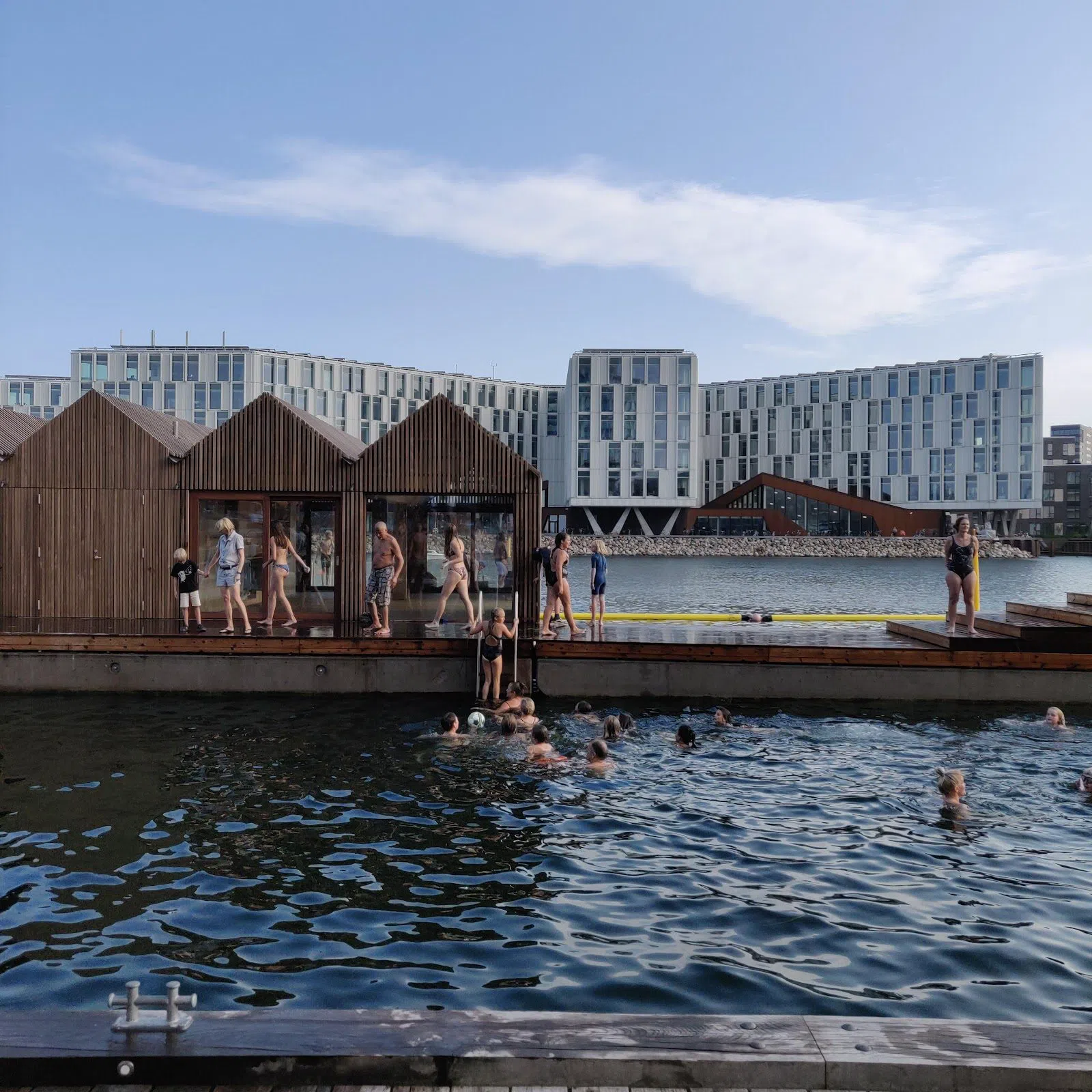
Refshaleøen: swim, sauna, eat — the full day
If you only build one harbour day around a single place, make it the island of Refshaleøen, across the water on the eastern edge. It packs the swimming, the sauna ritual and the eating into one walkable strip.
Start in the water at Søndre Refshalebassin (Refshaleøen), a free open-water bathing zone that sits right next to the Reffen street-food market. That adjacency is the whole plan: swim, then walk two minutes to eat, then drift into the wider Refshaleøen bar scene. It's the natural anchor for a group day on the island, and it asks nothing of you but a towel.
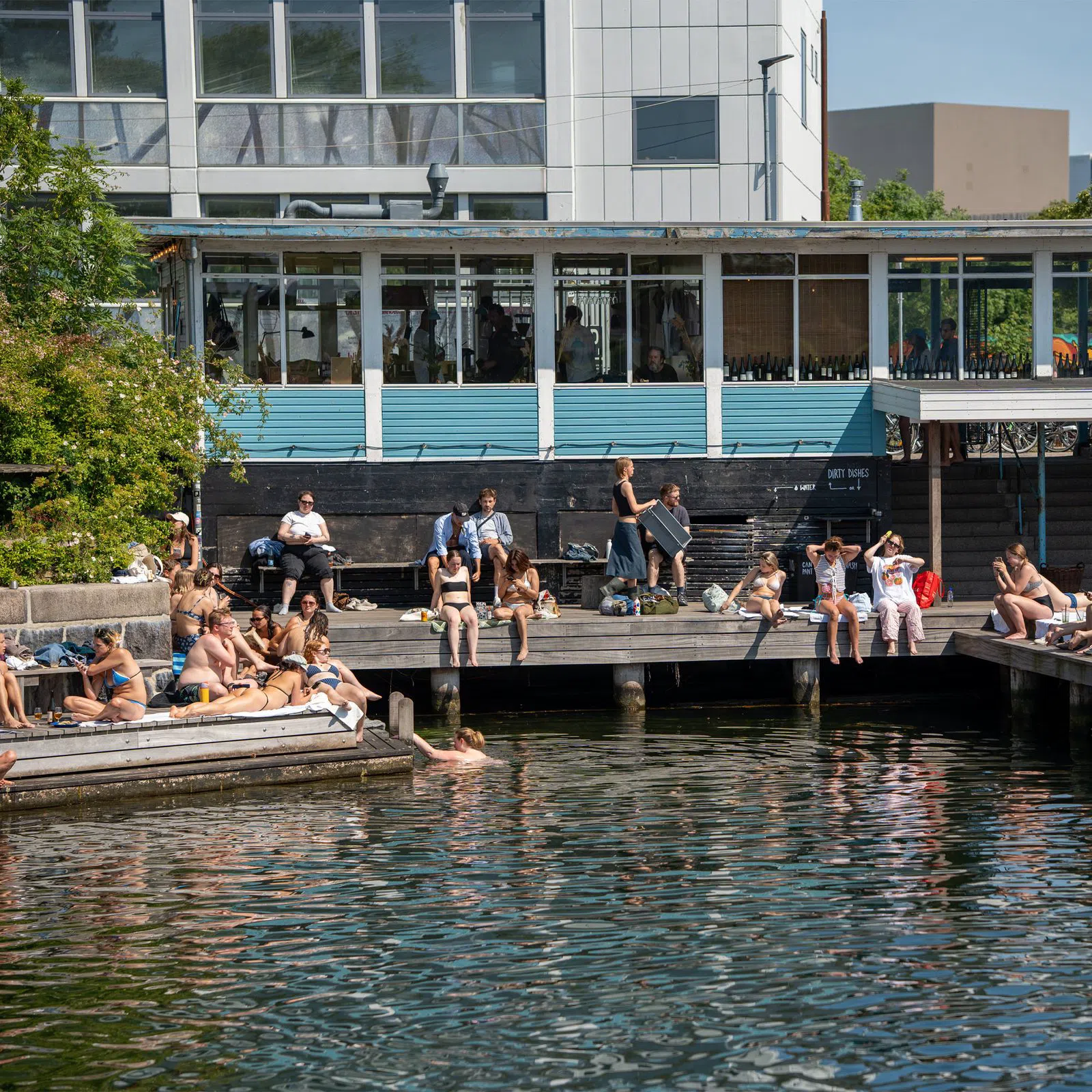
A short walk away is La Banchina (Refshaleøen), a cult little harbour-dip-and-natural-wine spot that has become shorthand for a certain kind of Copenhagen afternoon. Swimming off the jetty is free. The draw for a small group, though, is the wood-fired sauna, booked as a private session of roughly one hour forty-five minutes — reckon on around DKK 900–1,100 for the session — which you follow with a glass of something orange by the water. Two honest warnings: it's tiny and it gets genuinely crowded in summer, so book the sauna ahead and don't expect to stumble in with a party of ten.
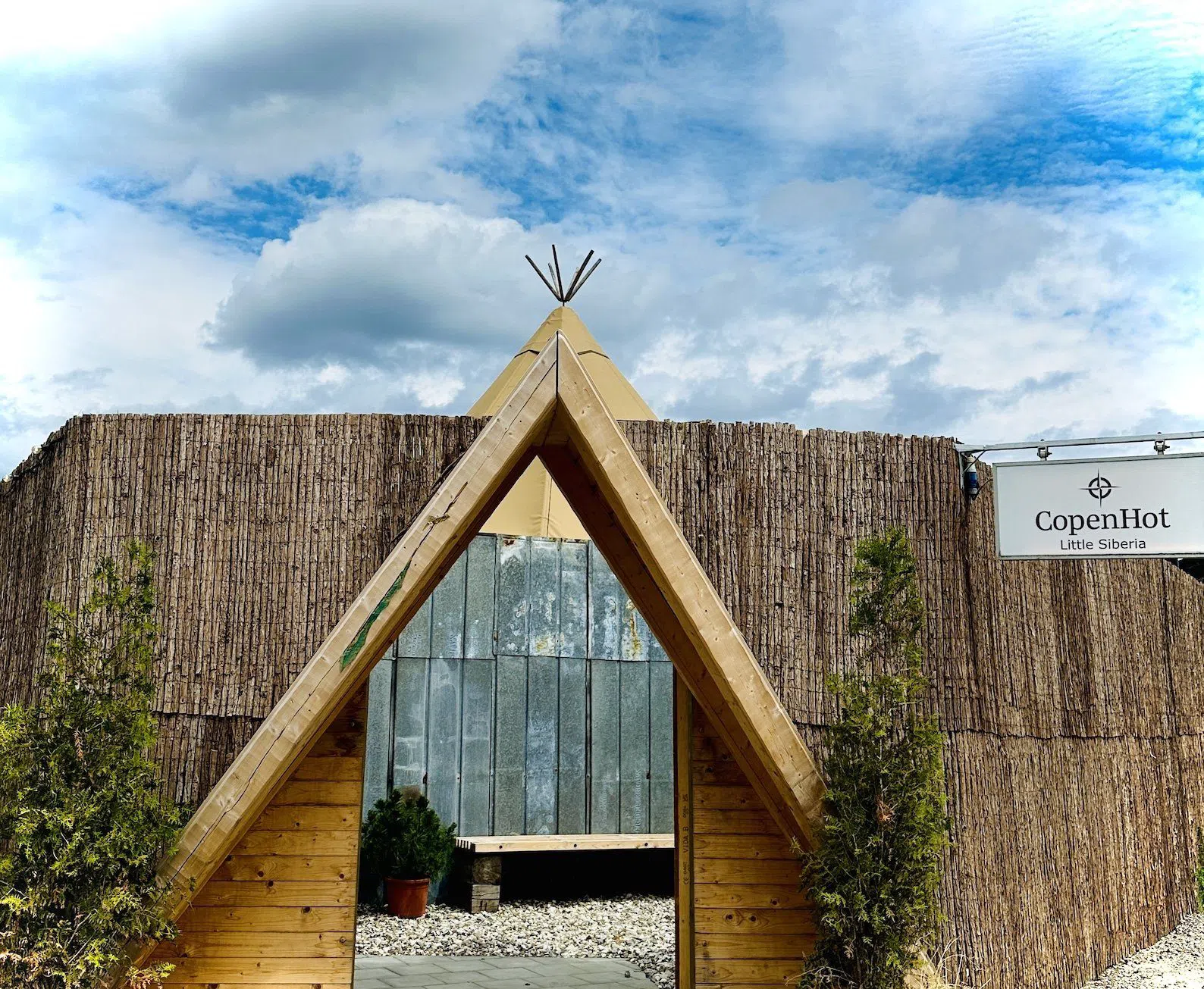
For the most group-oriented experience of all, there's CopenHot (Refshaleøen), Denmark's largest outdoor spa. This is the one built for crowds and celebrations: you book a private wood-fired hot tub (each seats five to six) or a sauna by the hour, at roughly DKK 200–400 per person, with the sailing hot tub — a captained tub that actually cruises out into the harbour — costing more and being the obvious showstopper for a party. Solo travellers aren't shut out: there are daily shared 'Hot Days' sessions you can join on your own. It's the least spontaneous entry on this list and the one most worth planning in advance.
What each spot is really for
Stripped down: for the classic photo and the buzz, Islands Brygge; for the same water without the crowd, Halfdansgade or, further out, the Sydhavn baths. To actually swim distance, Vandtrappen. For a year-round social scene, Sandkaj. For the swim-sauna-wine ritual, La Banchina in a pair or CopenHot for a group. For a five-minute cool-down mid-sightseeing, Havnegade. None of them will disappoint on a warm day; the difference is entirely about the day you want.
While you're mapping it out, the wider Copenhagen guide is worth a read for how these districts connect, and if you're still sorting where to sleep, a Copenhagen hotel search around Islands Brygge, Sydhavn or Nordhavn puts you within cycling distance of the water.
Practical notes
Getting there. A bike is the honest answer — Copenhagen is flat, and every bath here is a 10–20 minute ride from the centre on protected lanes. Failing that, the metro is quick: Fisketorvet and Nordhavn (for Sandkaj) both have stations within a few minutes' walk, and the harbour buses (part of the normal public-transport system) are a scenic way to reach Refshaleøen.
Cash and cards. You'll rarely touch cash. Denmark is close to cardless — contactless works everywhere, including CopenHot and La Banchina's bookings. Prices are in Danish kroner (DKK); the free baths cost nothing at all.
Timing and season. Water is warmest and lifeguards are on duty (typically 10am–6pm) from roughly June to late August. Outside that window many of the central zones close and go unstaffed — Sandkaj is the dependable year-round exception. On hot days, the central baths fill by late morning, so arrive early or head south to Sydhavn for space. Always check the water-quality status before you swim; after heavy rain, baths occasionally close for a day.
Budget. This is one of the cheapest great days out in an expensive city: nearly everything here is free. Your only real spend is the ritual add-ons — La Banchina's private sauna (around DKK 900–1,100 per session) and CopenHot (roughly DKK 200–400 per person, more for the sailing tub) — both worth pre-booking rather than chancing on the day.
Before you go
Is it safe to swim in Copenhagen's harbour?
Yes. The harbour water is regularly tested and clean enough for public bathing — the official baths only open when water quality passes. After heavy rain a zone may close for a day, so check the daily status before you go, and note that baths like Halfdansgade have deep water (around 8m) better suited to strong swimmers.
Do the harbour baths cost anything?
Almost all are completely free public bathing zones with no entry fee and no booking — you just walk down the steps. The only paid experiences are the wood-fired sauna at La Banchina (around DKK 900–1,100 per private session) and CopenHot's hot tubs and sauna (roughly DKK 200–400 per person).
When is harbour-bathing season in Copenhagen?
The water is warmest and lifeguards are on duty (typically 10am–6pm) from about June to late August. Many central zones close outside that window. Sandkaj in Nordhavn is the reliable year-round option if you're visiting in the cooler months.
Which harbour bath is best for a group?
Islands Brygge is the classic but gets packed, so arrive early. For space, head to the Sydhavn baths (Coral Bath, Vandtrappen). For a social day out, Sandkaj or a Refshaleøen combo of Søndre Refshalebassin plus Reffen street food. For a booked group experience, CopenHot's private hot tubs seat five to six each.
Where should I stay to be near the swimming?
Islands Brygge puts you beside the original bath and its quieter overflow at Halfdansgade; Sydhavn offers the roomiest baths for actual lap swimming; and Nordhavn gives you year-round Sandkaj. All three are within a short cycle of the city centre.