The Copenhagen issue
How Copenhagen Rides: The Bike Lane as the City's Circulatory System
A calm, street-level guide to seeing Copenhagen the way it was built to be seen — from the saddle, one unhurried kilometre at a time.
By Astrid HaugenCopenhagen neighbourhood by neighbourhood, on foot and by bike
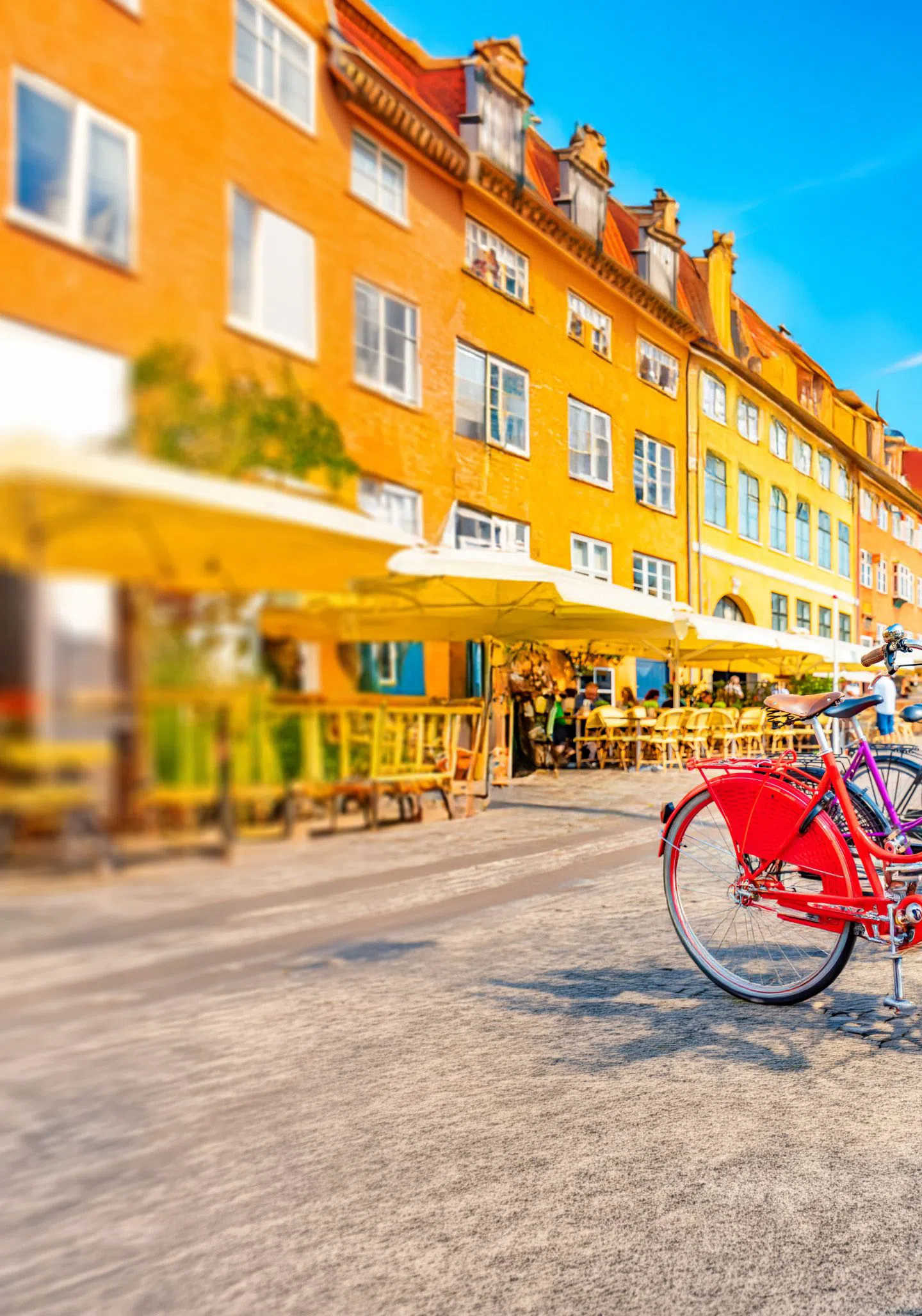
Come at dawn and stand on a corner in Nørrebro, and you will hear the city before you see it: the soft tick of freewheels, the ring of a bell, the whoosh of a cargo bike ferrying two sleepy children to daycare. In Copenhagen the bicycle is not a hobby or a statement — it is the plumbing, the thing that moves blood through the body of the city. This guide walks you, wheel by wheel, from your first nervous ride to the coffee stop where road cyclists compare tan lines, using only places worth your time.
Start here: guided rides for your first day
If you have never cycled in traffic — or never cycled at all beside a canal in a foreign country — do not begin alone. A guided ride teaches you the unwritten grammar of the lane (hand signals, when to hug the right, how the light phasing favours bikes) in a couple of hours, and you will ride the rest of your trip with your shoulders down.
The safe, storied first choice is Bike Copenhagen with Mike (based centrally, tours fan out across the old core). Mike is a born-and-bred Copenhagener with decades on these streets, and the operation is comfortable with everyone from a couple to a large private group; small-group scheduled tours run €40–55 per person over 3 to 3.5 hours, with fully bespoke private tours priced per group and available year-round. It is the least fussy way to get your bearings and hear the city from someone who actually grew up turning these corners.
If the idea of any group still makes you anxious, Cycling Copenhagen (small, capped departures) is the gentler room. Groups are deliberately small — typically no more than around ten — and the pace is unhurried, which matters more than it sounds when you are still learning to trust a Danish roundabout. Sightseeing rides run €40–50; there is a culinary option that costs more with the tastings folded in. Reviewers single out the guides for informing you without burying you in trivia, which is exactly what a nervous first-timer needs.
Worried less about traffic and more about distance or fitness? Copenhagen E-Bike Tours (small-group and private departures) flattens the whole question. The electric assist means a mixed-fitness group covers more ground with no stragglers and no one quietly dreading the next kilometre; child trailers are available, so families work here too. Expect €45–65 per person for a focused two hours. It is the honest choice for anyone who wants to see the harbour and the bridges without turning the day into exercise.
Plan your Copenhagen trip
Live prices from our booking partners.
Free cancellation on many rooms. We may earn a commission when you book.
Eating from the saddle
Copenhagen's cycling backbone and its dining culture were built to be experienced together, and one operator does exactly that. Foods of Copenhagen (rides through Vesterbro, Christianshavn and Freetown Christiania) pairs the everyday act of pedalling with real Danish eating — rye-bread smørrebrød, cider, snaps — across roughly four hours and about five food stops, crossing the harbour bridges into Christiania along the way. At €100–130 per person with all food and drink included, it is the priciest ride here, and worth it if you would rather your sightseeing arrive with lunch attached. It runs small-group and private; the private version suits a celebration or a group that wants to set its own appetite.

Going it alone: rentals and the share app
Once you have the grammar, riding solo is the point. This is a city that rewards wandering, and there are three sensible ways to put a bike under you.
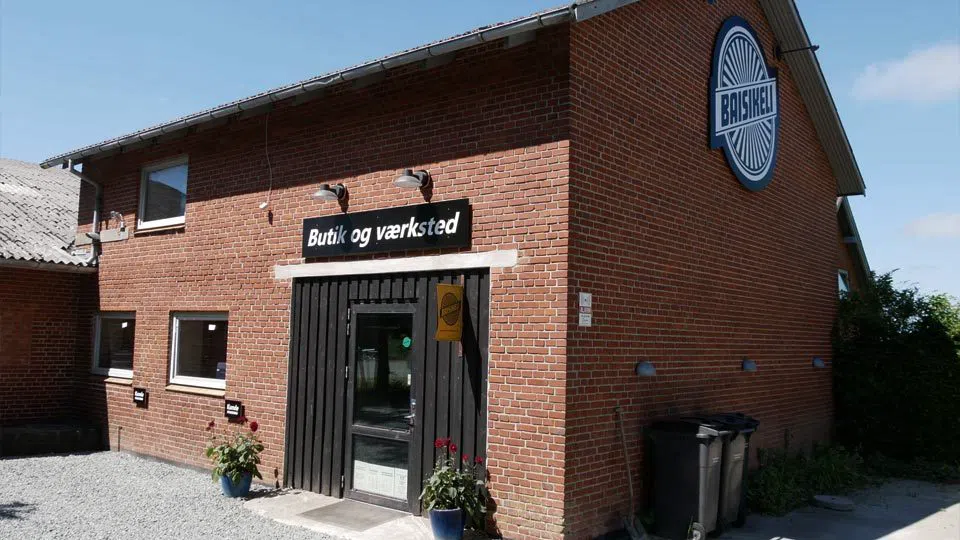
For best value with a conscience, Baisikeli (branches in Vesterbro and Nørrebro) is the walk-in to beat. It is a certified B Corp whose proceeds fund refurbished bikes and bicycle ambulances across Africa, so your rental does a second job while you sightsee. Reckon on about 95 DKK a day or 350 DKK a week (roughly €13 or €47), with locks and helmets included, and it is easy to kit out a whole group at once. If you are staying a few days, the weekly rate is the quiet bargain of this list.
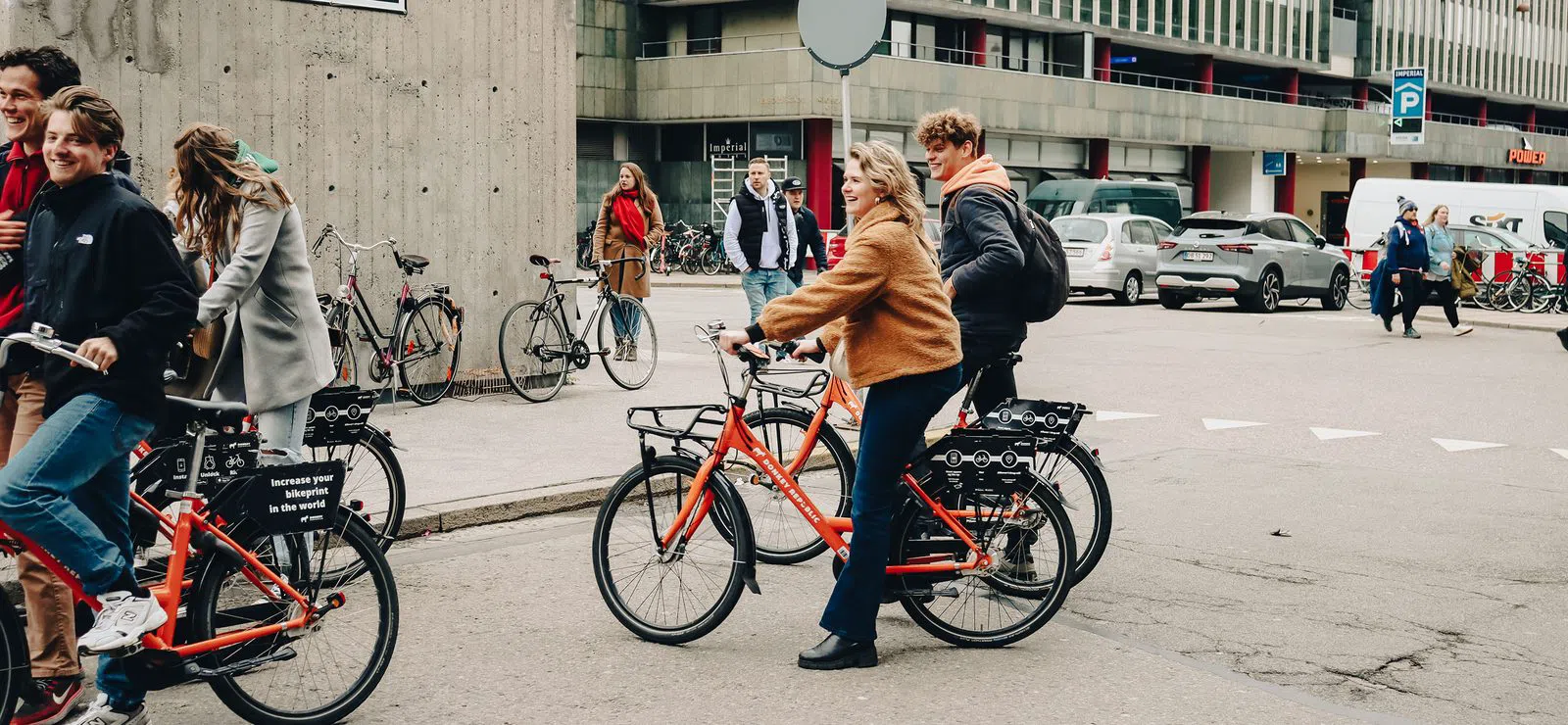
If you would rather not tie yourself to a shop's opening hours, Donkey Republic (dockless, 30-plus pickup points) is the tool locals actually reach for. Download the app, scan a bike, ride, and drop it at any hub — around 95 DKK a day or 1 DKK a minute (about €13 a day), with e-bikes higher. Each rider needs the app on their own phone, so it is ideal for a self-organising group but gives you no guiding and no hand-holding. It is the most flexible way to bike the city entirely on your own terms.
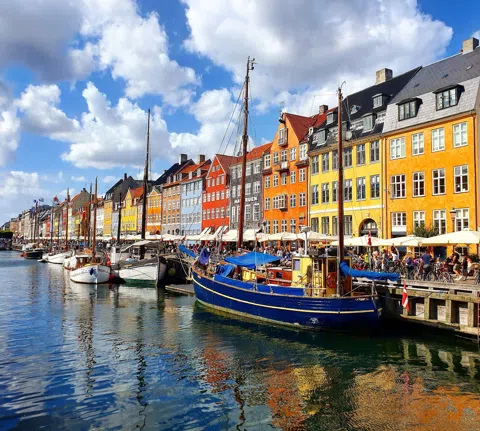
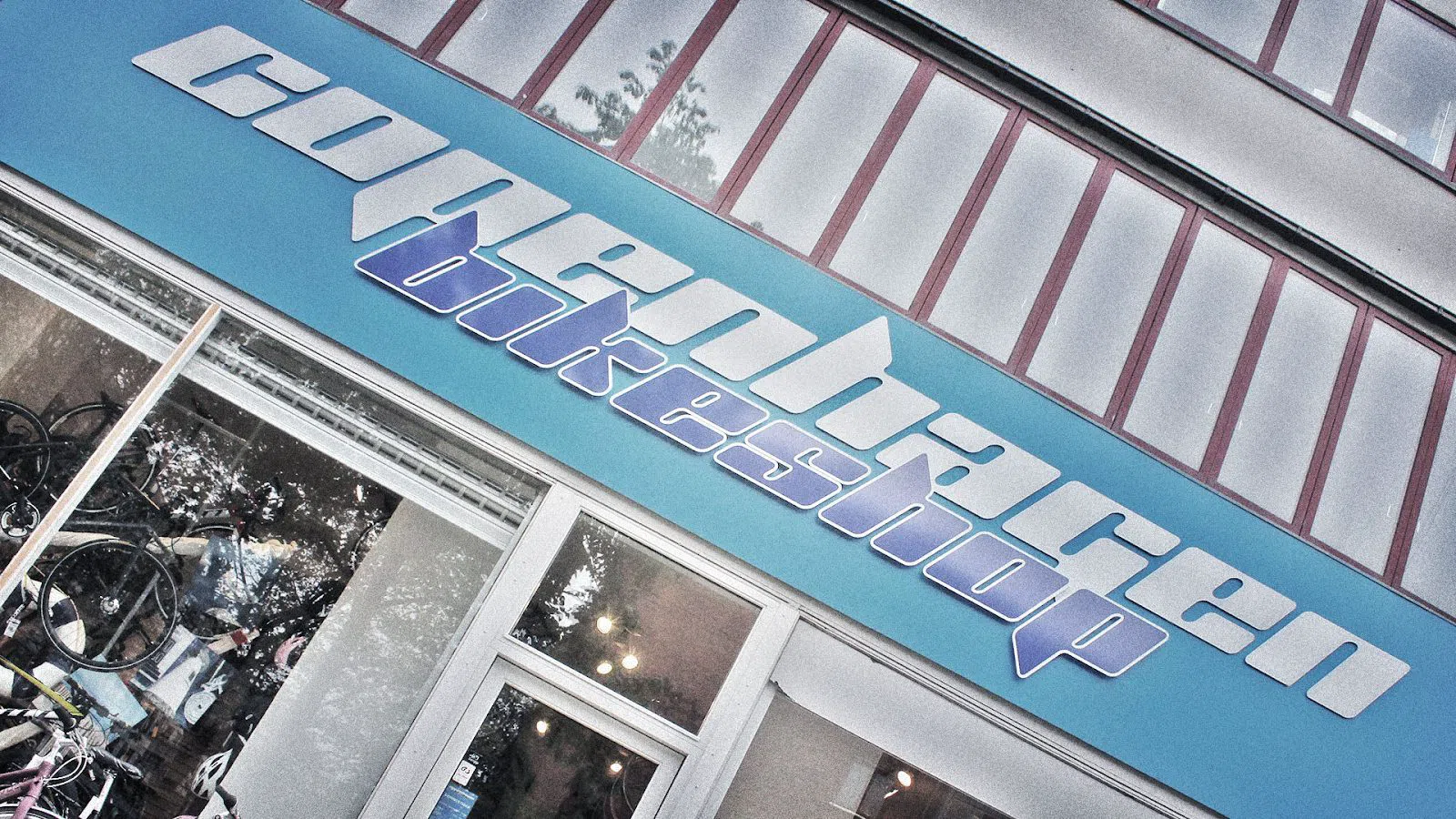
And if you want a shop rather than an app, and a location you cannot miss, Copenhagen Bicycles (at the mouth of Nyhavn) is unbeatably placed — you roll straight off the quay onto the harbour route. Walk-in rentals start around 110 DKK a day for a standard bike and about 195 DKK for an e-bike (roughly €15 and €26), and they carry family bikes that seat two children, which makes group pickup painless. If you have a family or a group arriving together and want a human to hand you a bike, start here.
The infrastructure worth riding for its own sake
Most cities hide their engineering. Copenhagen turns it into the showpiece of the ride, and two crossings are worth planning a route around.
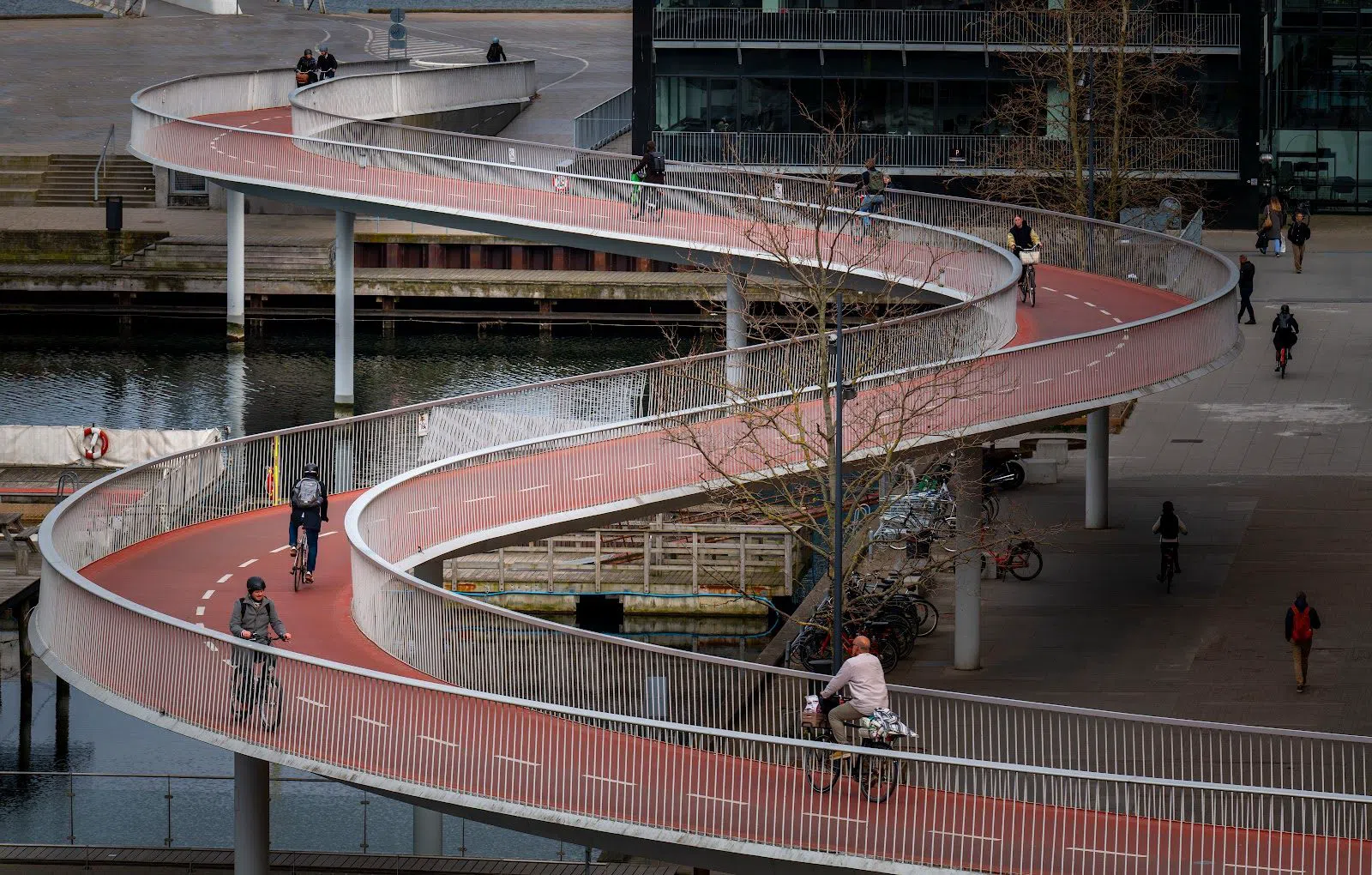
Cykelslangen — the Bicycle Snake (linking the harbourfront over the water) — is the world's most famous piece of cycling architecture, a 220-metre orange serpent that lifts you clear of the ground and curls across the harbour. It is free, open around the clock, and rideable in any size group; just hold your line and keep pace, because some 20,000 riders cross it daily and this is a working artery, not a photo prop. Ride it once for the view, then again slowly to feel how a mundane crossing was turned into theatre.
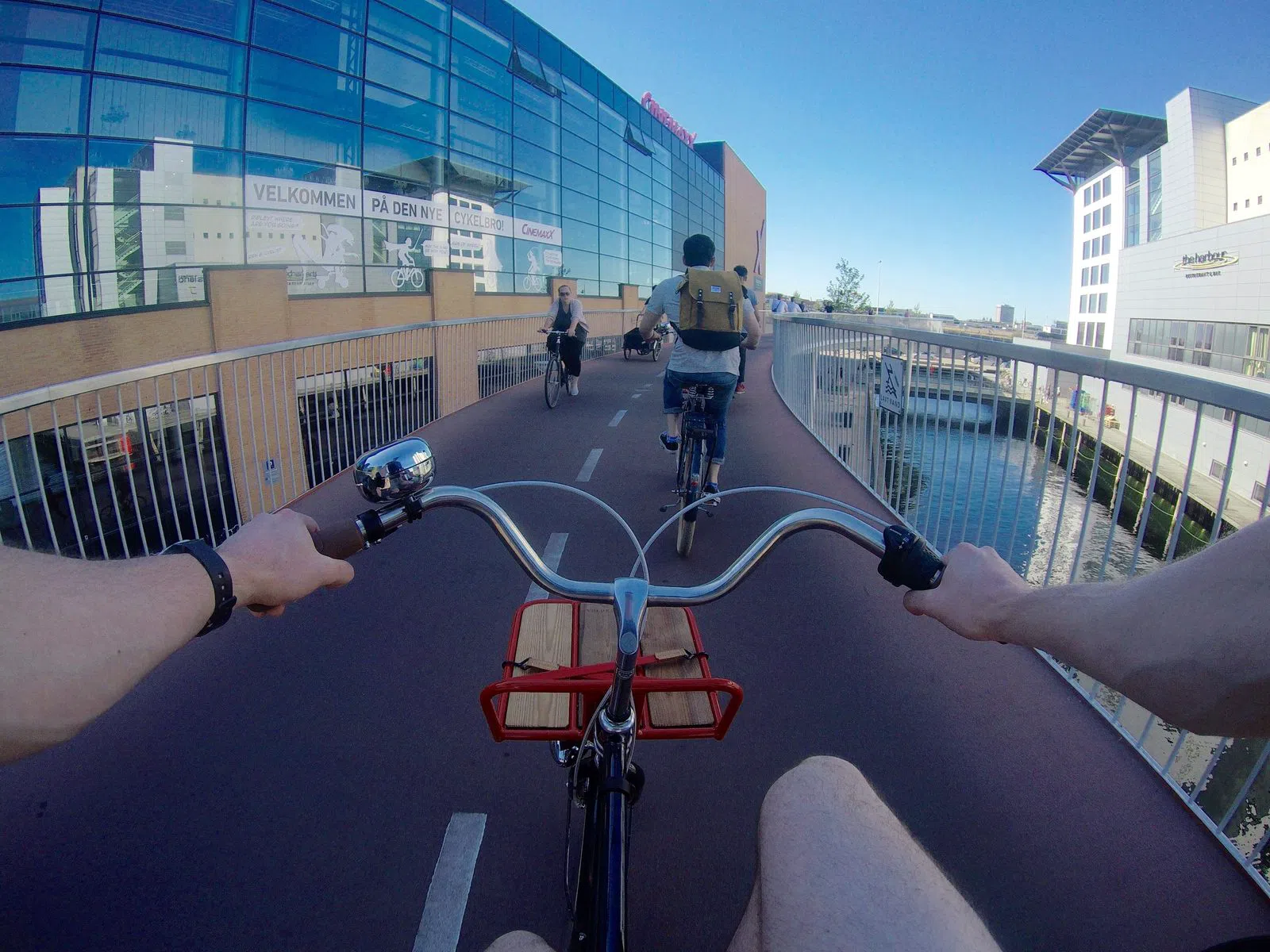
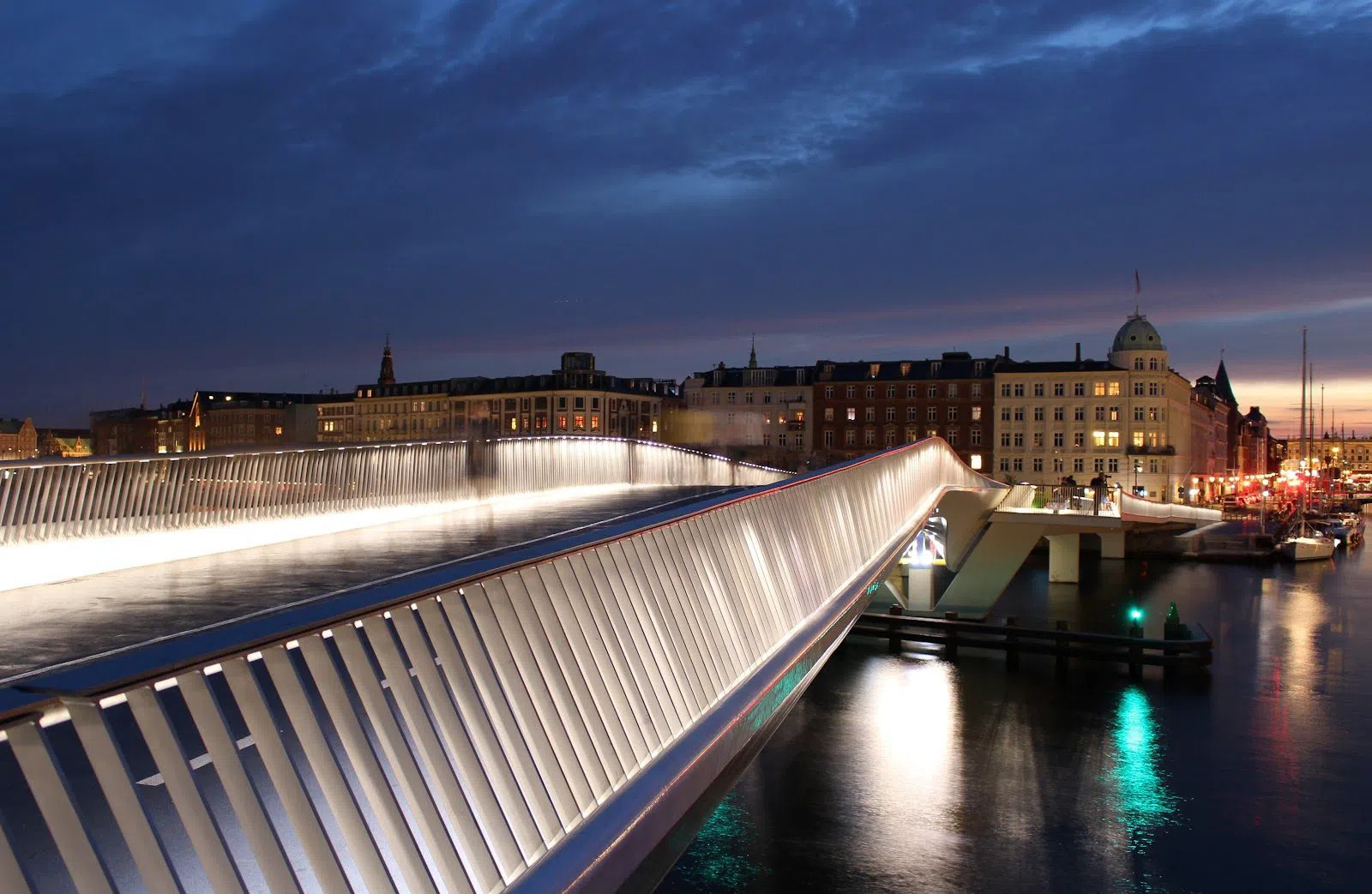
A short pedal away, Inderhavnsbroen — the Inner Harbour Bridge, known as the 'kissing bridge' (joining Nyhavn to Christianshavn) — is where you feel the city's commuter tide firsthand. Its two decks slide together like a kiss to let ships through, and at rush hour it fills with the cargo-bike current that defines Copenhagen. It is free and open to all, but take the sharp railings and the pinch points slowly, especially in a group — this is the busy end of the network, not a quiet backwater.
The origin story: cargo bikes and Christiania
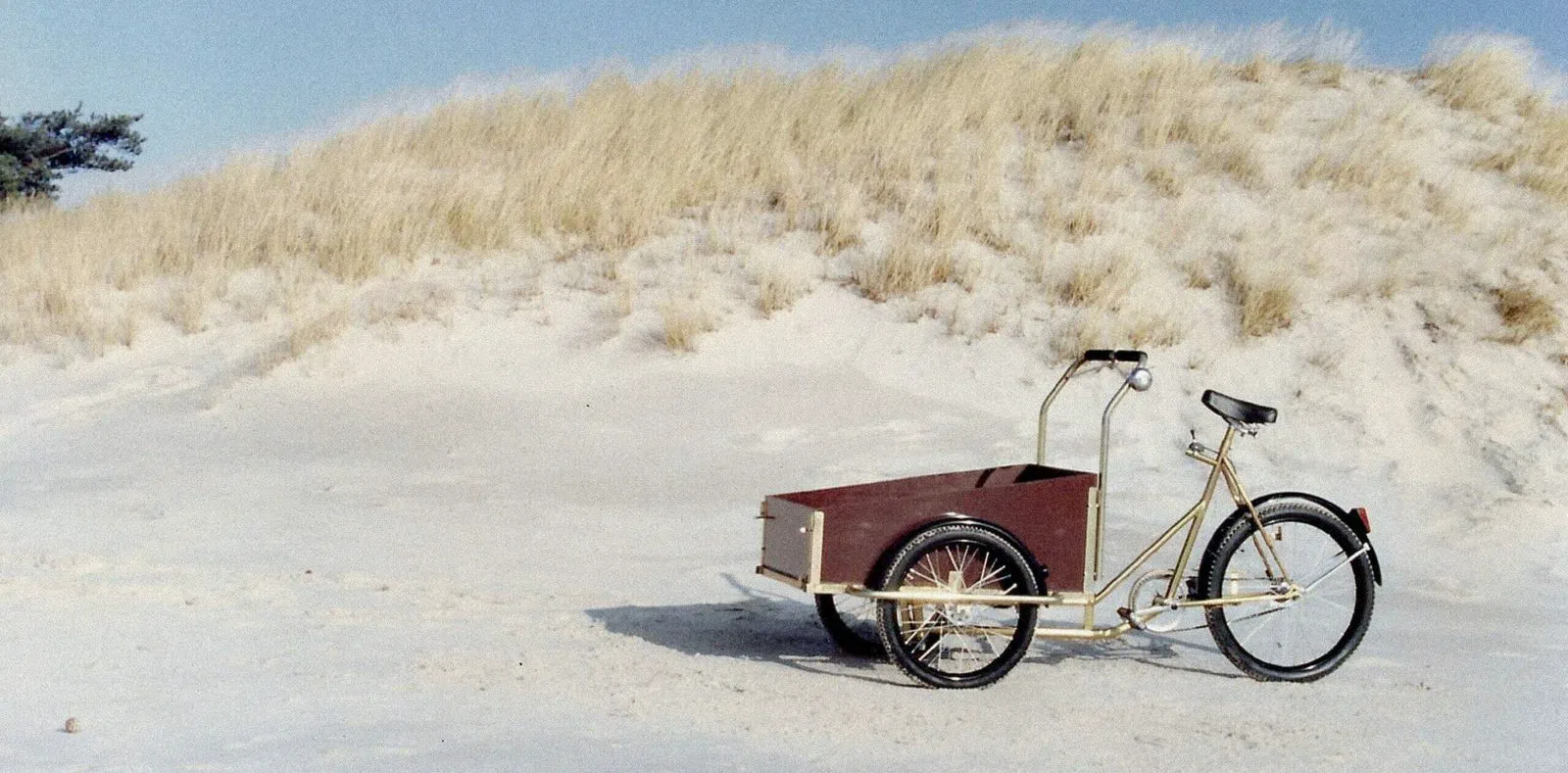
To understand why so many Copenhagen parents pilot a wooden box on wheels, ride into Freetown Christiania and find Christiania Bikes — the Christiania Smedie workshop (inside Christiania itself). This is the birthplace of the iconic Danish box-bike, made here since 1972, and you can walk in to see them, test-ride the original cargo trikes and custom-order one; visiting and test-riding are free, though the bikes are sold, not rented. Small groups are fine within Christiania's relaxed setting, but read the room — this is a residential community with its own rules, not a theme park, so keep it low-key and respect any request not to photograph. It is the single best place to grasp where Copenhagen's family cycling culture actually came from.
Where cyclists gather: cafés and one very good beer bar
A ride is only half the culture; the other half happens off the saddle, over coffee or a beer, and Copenhagen has grown a small constellation of places built specifically around bikes.
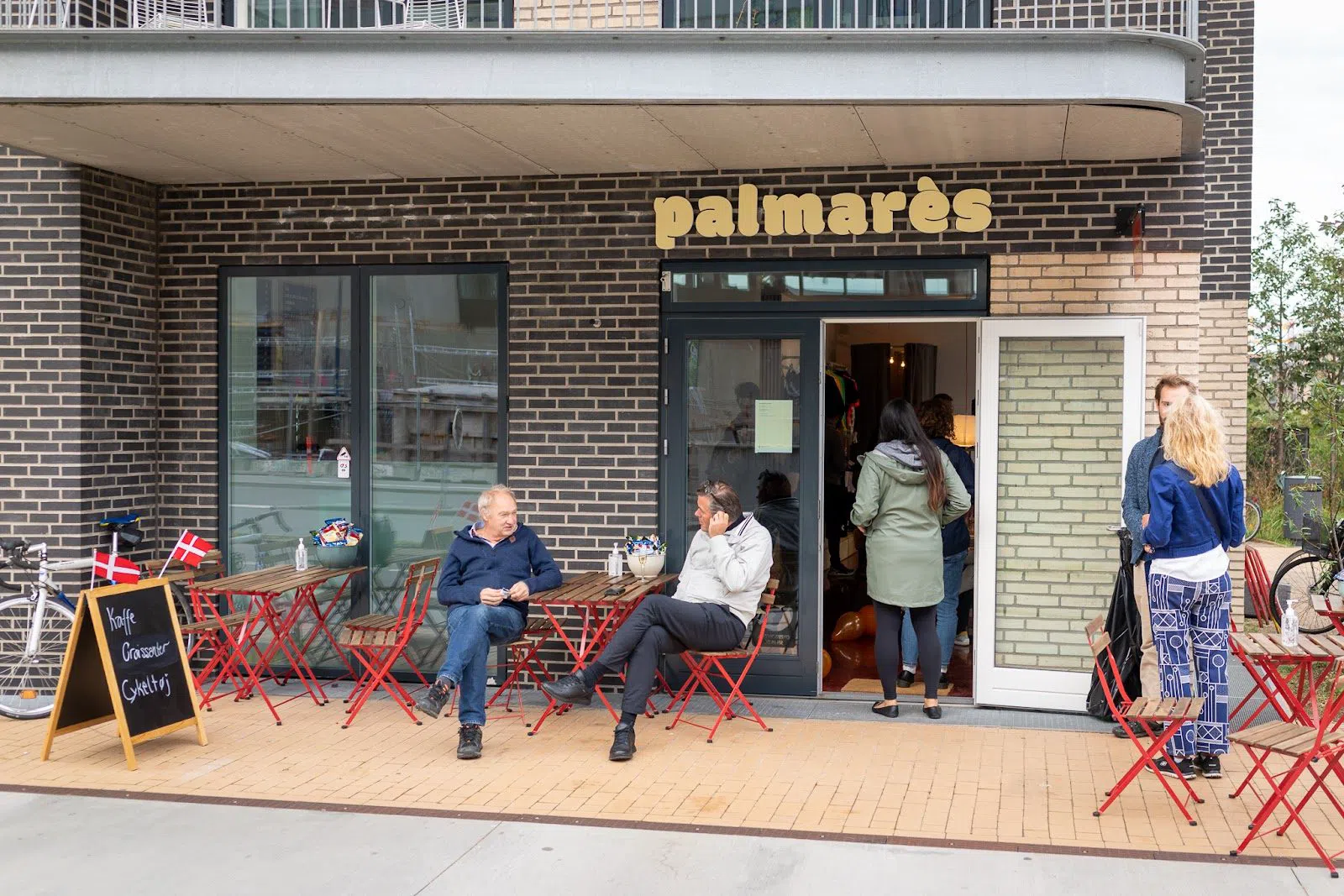
In the redeveloped docklands of Nordhavn, Palmarès Bike Café (Nordhavn) is a stylish shop-and-café hybrid where a genuine workshop and good coffee sit under a canopy of bicycles suspended overhead. Prices are gentle — coffee and pastries — and it comfortably takes a small group of cyclists who want to linger. It is a lovely, low-commitment stop that suits couples and pairs as much as a peloton, and a fair reason to ride out to Nordhavn in the first place.
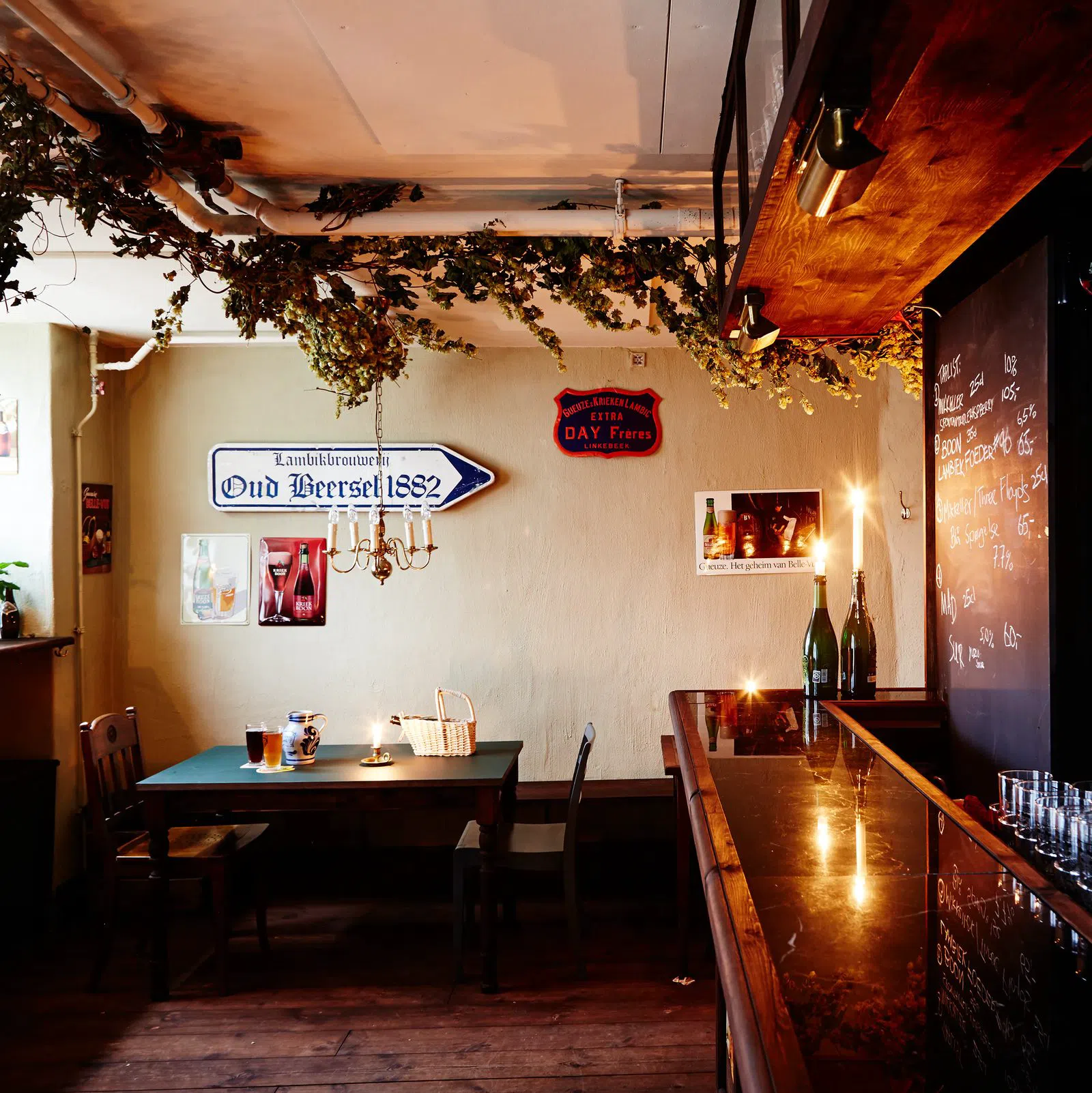
If your visit lands during a Grand Tour, Koelschip Cycling Café (Mikkeller's cycling-themed bar) is where sport meets the city's celebrated beer culture. Opened in 2025, it fills on race days with people watching a stage over a Belgian ale, and it is squarely a group place — lively, loud when the racing is on, and best enjoyed with a few friends rather than as a quiet tête-à-tête. Prices sit in the mid range for craft and Belgian beer. Go for the atmosphere on a race afternoon; skip it if you want somewhere calm to talk.
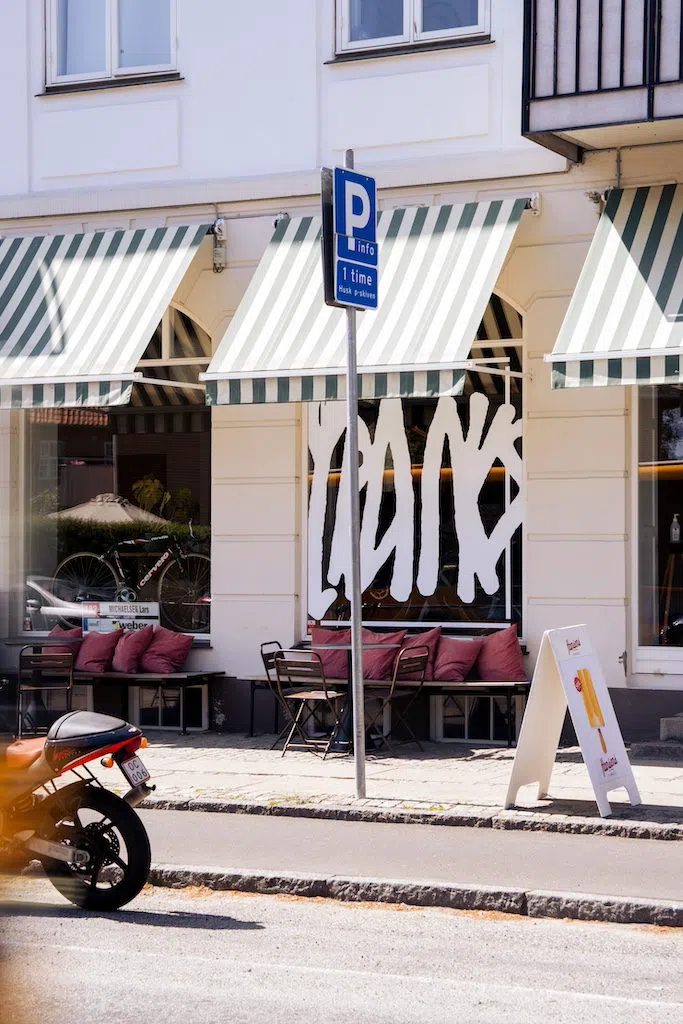
For the classic ride out of the city, point your wheels north along the coastal Strandvejen and stop at Cranks&Coffee (by the UNESCO-listed Dyrehaven forest). A road-cyclist institution since 2017, it is a café and bike shop in one that welcomes riders of every level and serves as the natural gathering point on the coast road. Expect mid-range coffee and light food. This is a proper ride — the coastal route north is longer and more exposed than anything in the centre, so treat it as a half-day outing rather than a quick spin, and it rewards a bright, still morning far more than a windy grey one.
Reading the city by season
A short word on when to come, because it changes the ride entirely. Late spring through early autumn is the easy window — long light, mild air, and a network at its most forgiving. High summer brings the crowds to the harbour bridges and the Snake, so ride those early if you want them to yourself. Autumn is quietly the connoisseur's season: thinner traffic, gold in the Dyrehaven trees on the Strandvejen run, and cafés that still have their outdoor seating. Winter cycling is entirely normal for locals — the lanes are cleared and salted before the roads — but the wind off the water is honest, and if you are new to riding in traffic, a guided ride or an e-bike takes the edge off a cold, dark afternoon.
Practical notes
Getting around. The centre is small and gloriously flat; almost everything above is within a few relaxed kilometres, and the harbour bridges knit the two banks together so you rarely need a detour. If you tire, bikes ride free on the S-train outside peak hours, which makes the Strandvejen run north easy to shortcut home.
Money. Copenhagen is close to cashless — card and phone are accepted almost everywhere, including the rental shops and app top-ups. Prices here are in Danish kroner (DKK), with euro hints only as a rough guide; carry a little cash only for the smallest stalls in Christiania.
Timing and booking. Guided and culinary rides fill in summer and on weekends — book Bike Copenhagen with Mike, Cycling Copenhagen and Foods of Copenhagen a few days ahead. Walk-in rentals are usually fine same-day outside July, but a large group should call ahead. Ride the Snake and the kissing bridge outside the 08:00 and 17:00 commuter peaks if you want space.
Budgeting. A self-guided day on a Baisikeli or Donkey Republic bike costs about €13; a standard guided tour €40–55; the e-bike tour €45–65; and the full culinary ride €100–130. Cafés are inexpensive. A sensible plan is one guided ride to learn the ropes, then two or three self-guided days exploring on your own.
Where to stay. Base yourself near the harbour or in Vesterbro and Nørrebro to be inside the cycling grid from your first morning — start your Copenhagen hotel search there. For everything beyond the bike lane — food, neighbourhoods, what to see on foot — our full Copenhagen guide picks up where this one leaves off.
Ride gently, give way with a nod, and you will find the city opens the way it does for locals: quietly, at the speed of a bicycle.
Before you go
Is it safe to cycle in Copenhagen as a complete beginner?
Yes, but start with a guided ride. Copenhagen's lanes are separated from traffic and the whole network is beginner-friendly, but the unwritten etiquette — hand signals, keeping right, letting the faster commuter tide past — is learned fastest in a couple of hours with a small-group operator like Cycling Copenhagen before you head out alone.
Should I rent a bike, use the Donkey Republic app, or book a tour?
Do both: take one guided tour on day one to learn the city, then go self-guided. For solo riding, Donkey Republic is the most flexible (each rider needs the app), Baisikeli is the best-value walk-in, and Copenhagen Bicycles is the easiest pickup if you want a shop and a family bike rather than an app.
How much does cycling Copenhagen cost?
A self-guided day costs about 95 DKK (roughly €13) for a rental or share bike. Guided sightseeing tours run €40–55, e-bike tours €45–65, and the full culinary bike tour €100–130 with food included. The famous bridges and the Bicycle Snake are free to ride.
What is the Bicycle Snake and can anyone ride it?
Cykelslangen, the Bicycle Snake, is a 220-metre elevated orange cycleway curling across the harbour — the world's most famous piece of cycling architecture. It's free, open 24/7 and rideable by any size group; just hold your line, as around 20,000 riders use it daily. Ride it outside commuter peaks for space.
When is the best time of year to cycle in Copenhagen?
Late spring to early autumn is easiest, with long light and mild air. Autumn is the quiet connoisseur's season — thinner traffic and gold in the Dyrehaven trees on the coastal ride north. Locals cycle all winter on cleared, salted lanes, but the harbour wind is sharp, so an e-bike or guided ride helps newcomers.