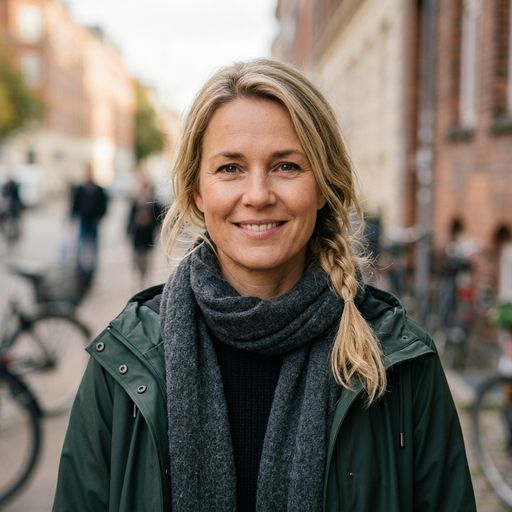
The boat comes in low and almost silent, because the fleet runs on batteries now, and the woman ahead of you rolls her bike aboard without once looking up from her phone. Nobody photographs the water. This is the 09:12 to work, it costs the same as a bus, and it is still the best ride in the city.
Copenhagen sells canal cruises to visitors and runs a better boat for its own residents at a fraction of the price. The same logic holds above ground: the trains that take office workers home also drop you at a deer park, at a castle floating on three lakes, and at one of Europe's great coastal museums. What follows is the network as locals actually use it: which crossings are worth making for their own sake, which suit two people and which can absorb a group of twelve, and what the 2026 timetable changes and building works mean for a trip planned this year.
Riding the harbour bus like it is a bus
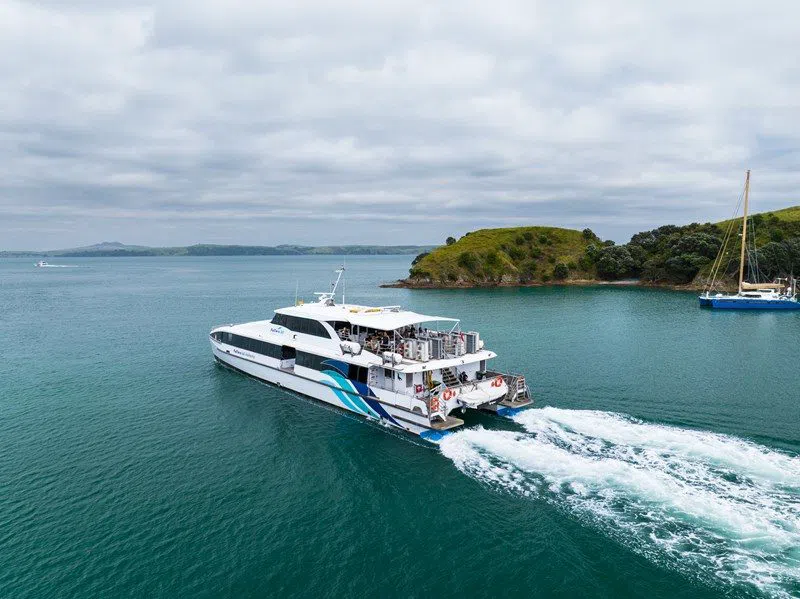
Havnebussen (the harbour buses, lines 991, 992 and 993, working the inner harbour from Nordhavn to the southern canals) is public transport, not an excursion. Seven battery-electric boats operated by GoCollective (the former Arriva Danmark, renamed in 2024) run for Movia and thread the whole harbour from Orientkaj in the north to Teglholmen in the south for the price of a bus fare. A two-zone single is around DKK 25, and the boats are free with a Copenhagen Card or a City Pass, which is the single most useful thing to know about them: if you have already bought a travel pass for the trains, the harbour is included and you can hop on and off all day at no extra cost.
There is no booking and no door policy, and that cuts both ways. The boats are small. Seats fill fast between June and August, bikes take up deck space, and a party of ten will not board together at Nyhavn on a warm Saturday. Split large groups across two departures and agree a stop to regroup at. It is a ten-minute wait, not a disaster. Couples get the better end of the deal here: stand at the stern rail, keep out of the bike lane painted on the deck, and you have a moving view of the whole waterfront for the cost of a coffee.
The 2026 season is better than previous years. From January the city funded a longer operating season, running from Easter through to the autumn half-term, and later sailings, weekdays until 22:00 and weekends until midnight. Two caveats to carry with you. The Holmen Nord stop, unserved for years, was formally scrapped in 2026, so ignore it on any older map. And line 993, the Opera shuttle, only sails when the fleet is not stretched by summer frequencies elsewhere, which means it is not something to build an evening around without checking.
The northern end at Orientkaj
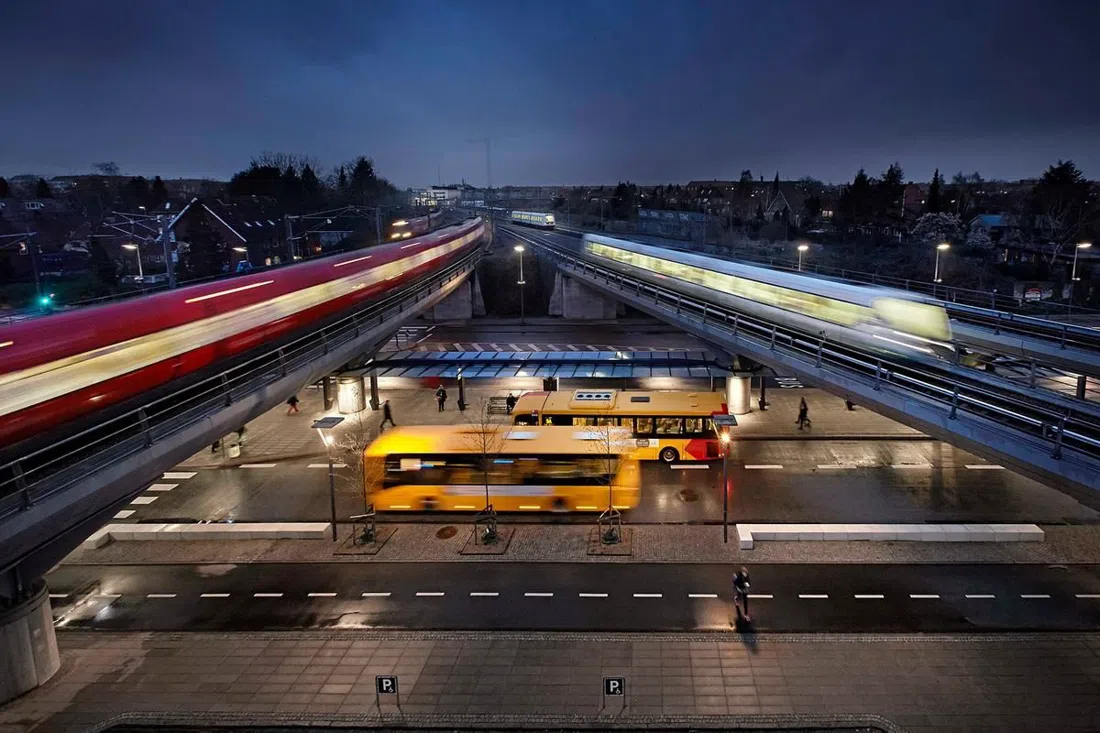
Orientkaj (metro station and harbour ferry terminus, Nordhavn) is where the boat run begins and the clearest place to see why any of this works. Cobe and Arup's overground station borrows the proportions of a shipping container from the docks it replaced, and it is free to walk into and photograph from the platform. The boardwalk is wide enough that a group can spread out without blocking anyone.
Walk a few minutes from the station and you reach the Sandkaj bathing zone, which is open year round; Copenhageners swim there in February, briefly and loudly. That is the neat trick of the northern terminus: the commute ends in the water. Come by metro on the M4 and leave by boat, or the reverse, and you have covered the entire length of the harbour, north to south, twice by two completely different means for two single fares.
Refshaleøen repays the crossing
Refshaleøen and Reffen (former shipyard island, east side of the harbour) is the stop that justifies the ferry on its own. The island is reachable only by boat, by bike or by a single bus route, and arriving by water is the point. Take a taxi and you have paid more for less. Reffen itself is roughly 35 container kitchens, bars and a brewery on an open-air site, opening for the 2026 season on 13 March and turning over in winter to Reffen Skøjteøen, the ice rink.
This is the most group-friendly place on the whole run. Communal benches, no reservations needed for the market, dishes at DKK 90 to 150, entry free, and the surrounding venues take large bookings. Twelve people can eat here without anyone organising anything, which is rarer in this city than it sounds. Come in the shoulder season if you can: March and late September have the same light off the water and a quarter of the queue.
The one building with its own ferry
Operaen (the opera house, Holmen, directly across the water from Amalienborg) is the only building in Copenhagen with a scheduled boat of its own. Harbour bus 993 shuttles from Nyhavn before evening main-stage performances and keeps running back afterwards until the last guest has left. It is about as close as the city gets to a ceremonial commute, and a far better arrival than the walk round.
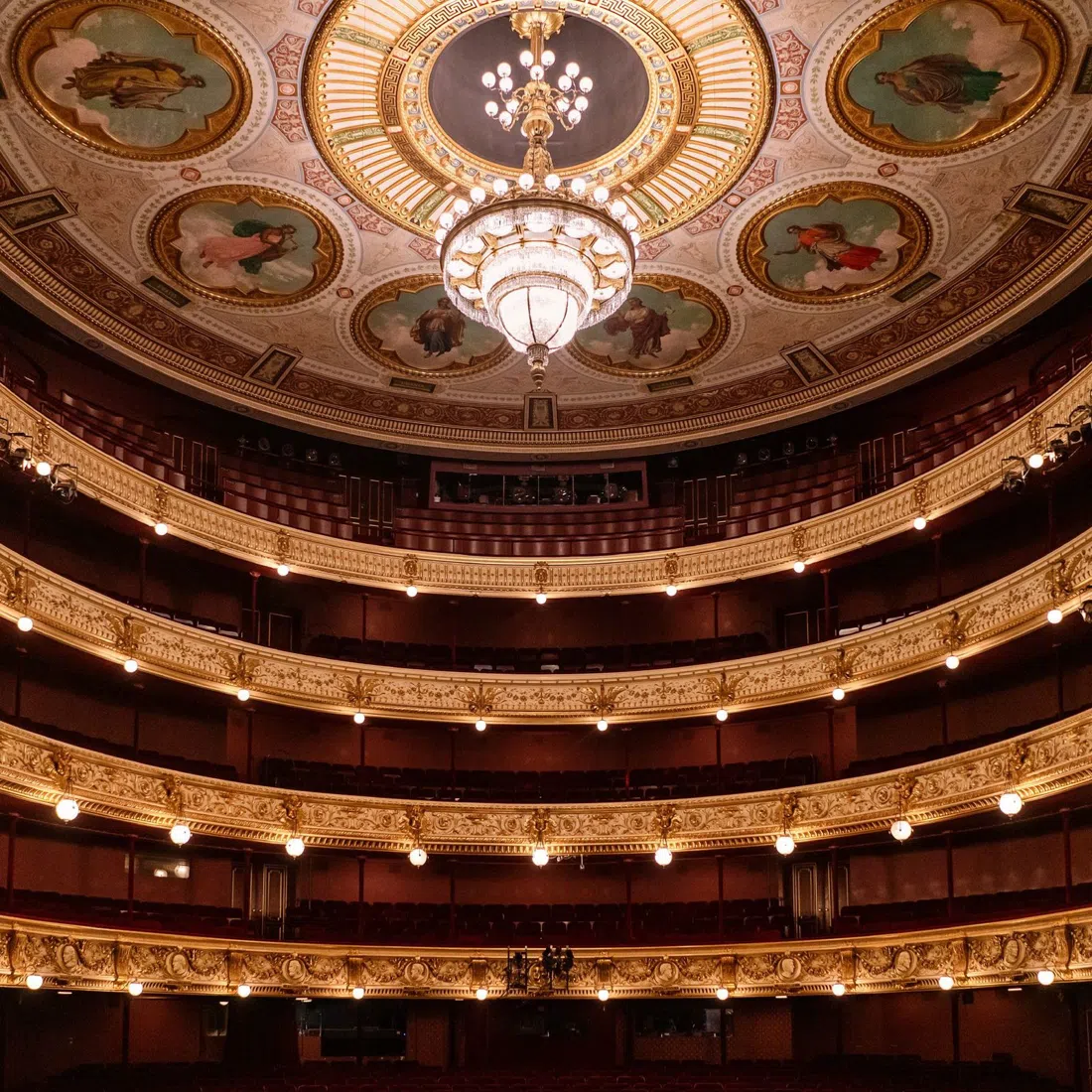
Tickets run from around DKK 175 to DKK 900 and up, and group bookings go through the Royal Danish Theatre rather than the box office queue. If you are not seeing anything, the foyer and the terrace are open to non-ticketholders, and the terrace view back across the harbour at dusk costs nothing. The 2026 service plan does trim opera sailings on summer weekends, when the boats are needed for general frequency, so confirm the shuttle is running on your date rather than assuming it.
Swimming and cycling on the southern run
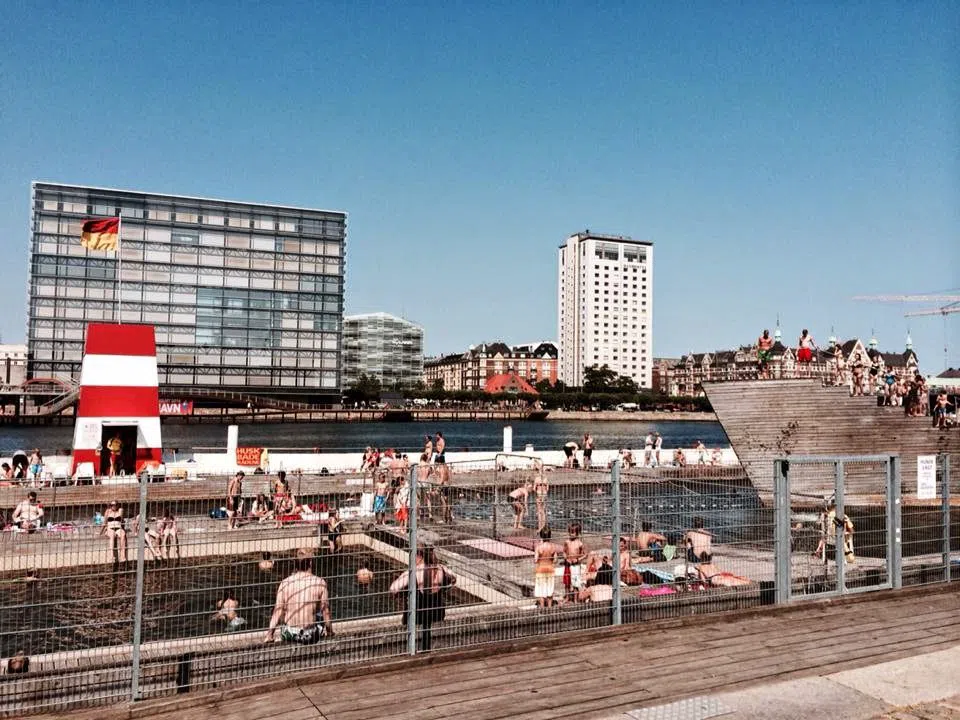
South of the centre the harbour changes character. Islands Brygge Havnebadet (harbour bath and ferry stop, Islands Brygge) is a PLOT/BIG design from 2003 and the thing that made swimming in a working port normal. Five pools including a five-metre diving platform, free, unbookable, capacity around 600, which means queues on genuinely hot days. Groups should arrive before midday or accept a wait. It sits right off the 991 and 992 pontoon, so a Copenhagener can leave the office, step off the boat and be in the water inside a minute. Do that once and the city makes sense.
Cykelslangen (the Bicycle Snake, elevated cycle bridge between Kalvebod Brygge and Havneholmen) is a two-minute ride and worth building into the day if you have a bike; hire runs from about DKK 100 a day. Dissing+Weitling's 2014 track curves over Gasværkshavnen and carries roughly 12,000 riders a day, replacing a route that previously made cyclists carry their bikes down a flight of stairs. Ride it single file and keep moving. Commuters use it at speed, and stopping mid-span to take a photograph will earn you a bell and a look.
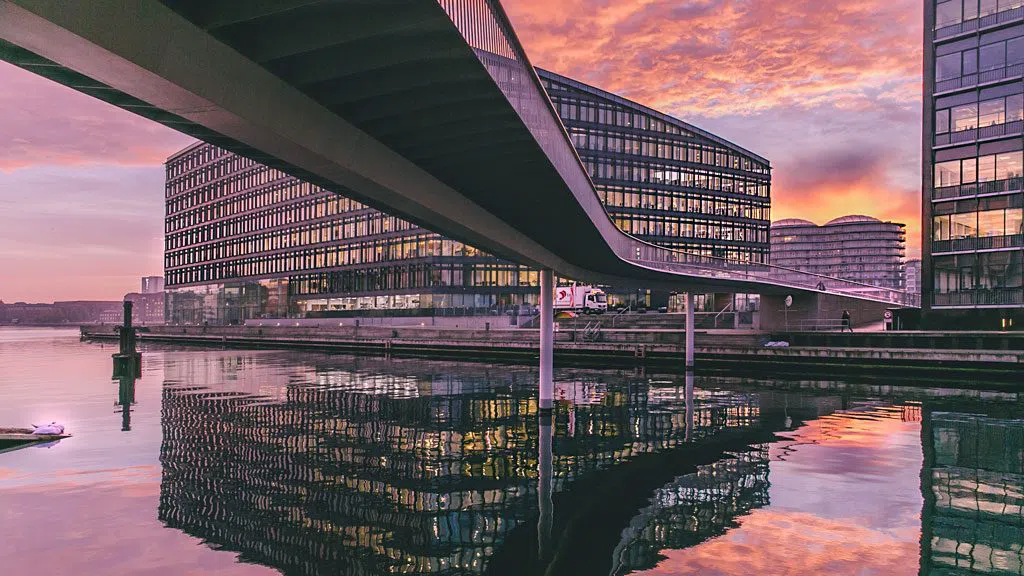
Sluseholmen and Teglholmen (canal district, southern harbour) is the far end of the ferry and the part visitors never reach. Sjoerd Soeters and Arkitema built artificial islands on dug canals holding around 1,150 flats, a deliberate borrowing from Dutch canal-island planning, and it is freely walkable with no capacity issues and few facilities for large groups. There is not much to do here, which is exactly why it is interesting: this is a commuter district being assembled outward from the water, and you are watching it happen. Fifteen minutes of walking is enough.
The metro shadows the ferry underground
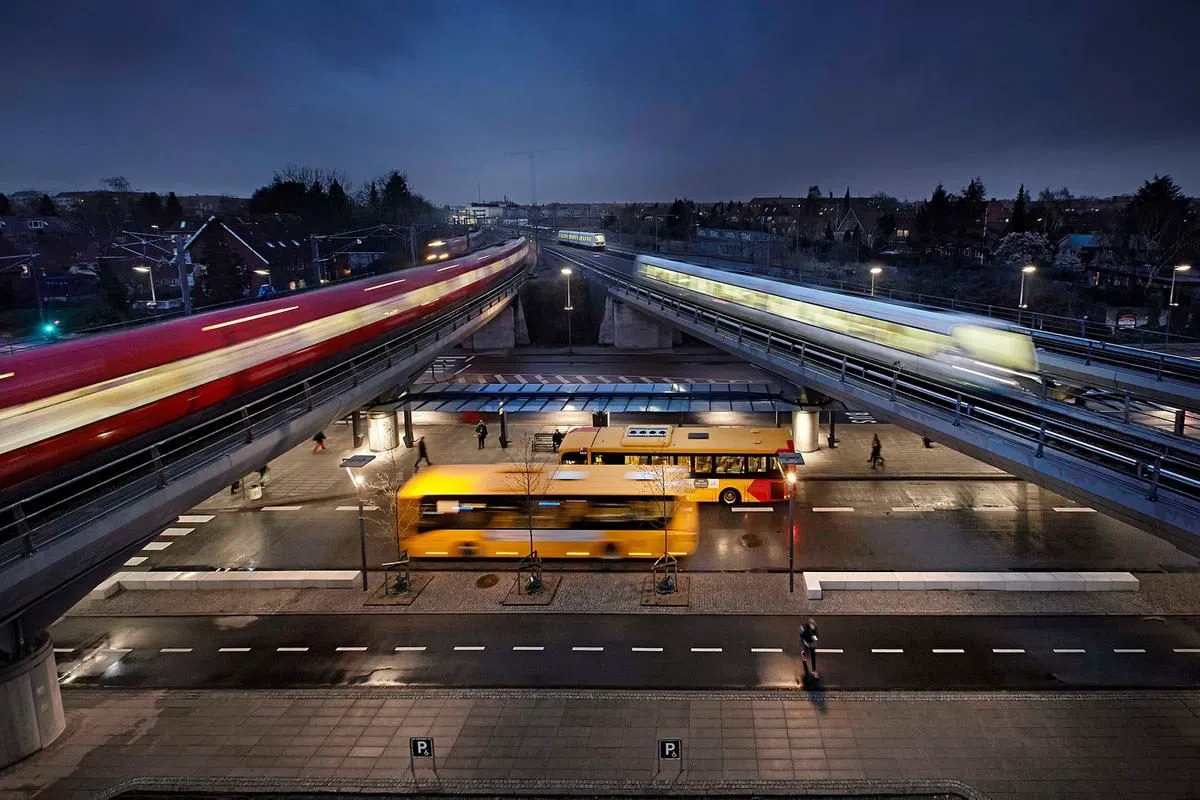
The Copenhagen Metro (lines M1, M2, M3 Cityringen and M4, city-wide) is the counterweight to everything above. Driverless, fully step-free, running around the clock, no timetable worth reading. Same zone fares from about DKK 25, Copenhagen Card valid. For groups moving late, after the last boat or after a concert, it is simply the answer.
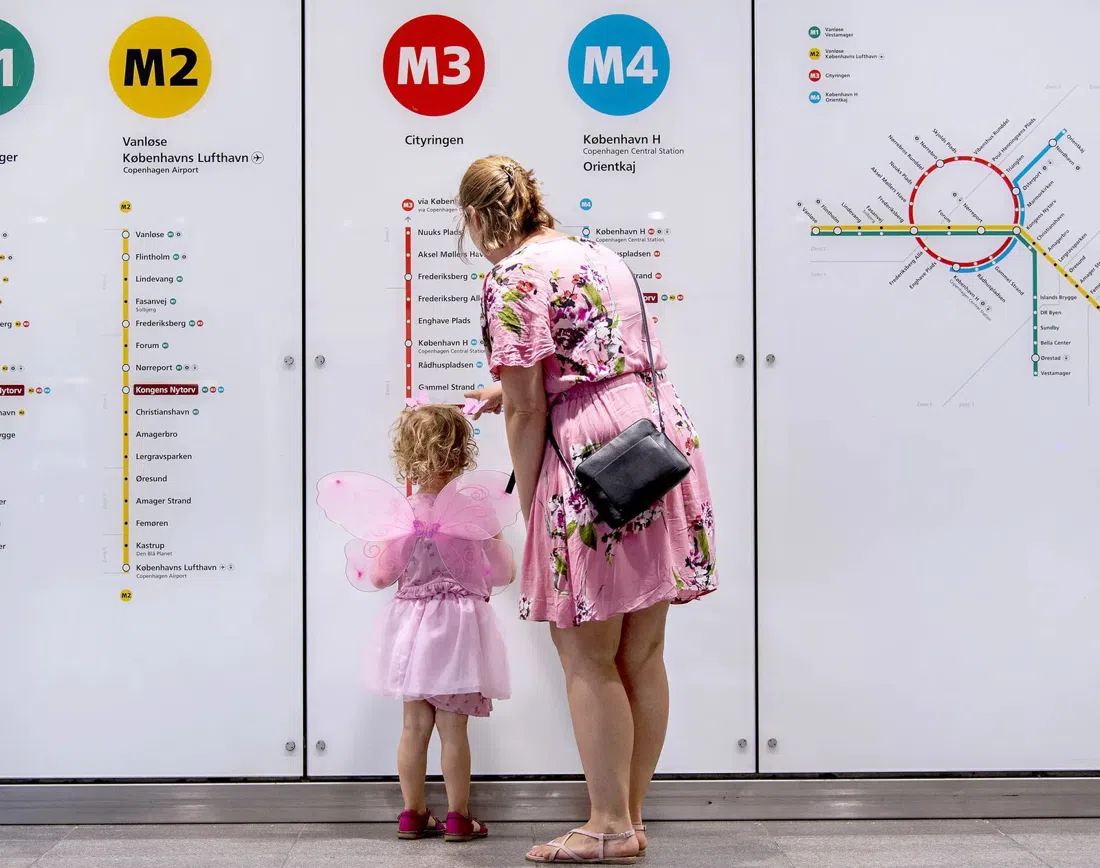
The useful detail for this trip is that the M4 was extended on 22 June 2024 through Havneholmen, Enghave Brygge, Sluseholmen and Mozarts Plads down to København Syd. The metro now runs beneath the southern harbour ferry route. So ride the boat one direction and the tunnel back, and you get the same journey twice at two speeds: twenty-five minutes of open water, then eight minutes of nothing at all.
Six letters and one shared core
The DSB S-tog (S-train network, lines A, B, Bx, C, E, F and H) is the other half of the system. Six lettered services fan out from the centre (A to Hillerød, B to Farum, C from Klampenborg to Frederikssund, E from Holte to Køge, H to Ballerup, and F looping the Ringbanen around the inner suburbs), and they run every few minutes across the shared core, which is why nobody in this city checks a departure board. Turn up and go. Two-zone singles start around DKK 25; a City Pass Small covering 24 hours is about DKK 90 and pays for itself in four rides.

There is ample standing room and multi-purpose space for groups, with one honest exception: avoid 07:00 to 09:00 and 15:30 to 17:30 if you are carrying luggage. You will fit, but you will not be popular. Worth knowing while you ride: DSB signed a €3bn deal with Siemens and Stadler in January 2026 for 226 driverless sets, so the driver in the cab has a visible expiry date and the system you are riding in 2026 is on its way out.
Two stations that explain the city
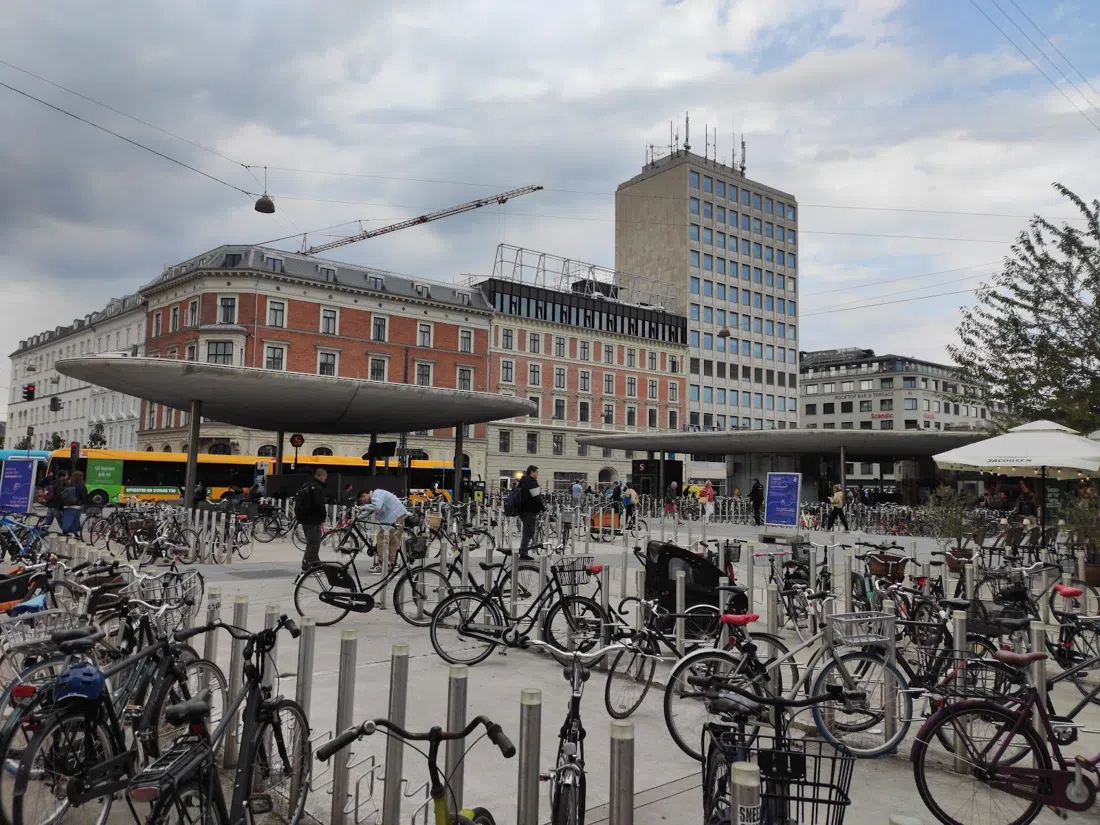
Nørreport Station (interchange, between the old town and the lakes) is Denmark's busiest, around 250,000 people a day, and the one place where S-train, metro, regional trains, buses and the bicycle city collide in a single surface-level square. Cobe and Gottlieb Paludan rebuilt it between 2011 and 2015, deliberately erasing the station building so that the crossing itself became the architecture. There is no concourse, just a square you walk across. It is a workable meeting point but genuinely crowded, so name a specific pavilion rather than "the station" or you will spend fifteen minutes on the phone.
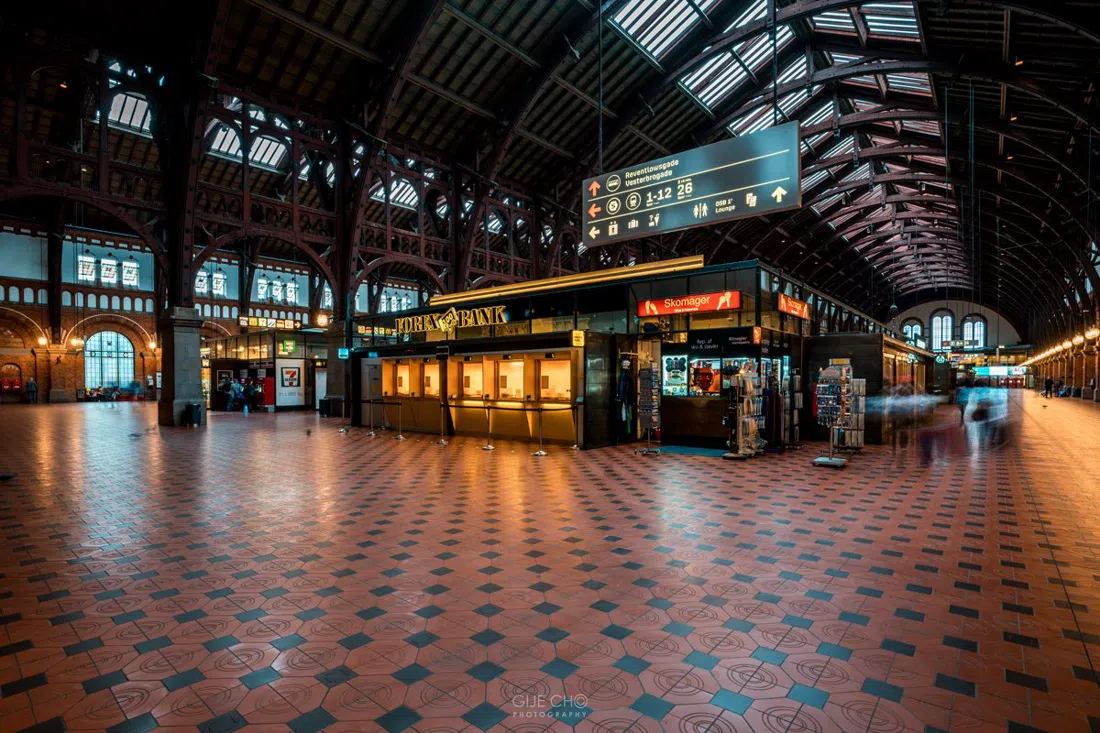
København H (Copenhagen Central Station, beside Tivoli and Vesterbro) is the opposite instinct. Heinrich Wenck's 1911 timber hall remains the most beautiful transport interior in the city, and it is the junction where the commuter network meets the airport and the Swedish side. Free to enter, staffed, with large luggage lockers and a wide concourse that suits groups arriving together. The airport train is about DKK 40. One caveat to print in your notes: a phased modernisation running from 2025 into 2028 is stripping out half the retail pavilions, so expect hoardings and shifted wayfinding right through 2026. Look up at the roof and ignore the ground floor.
Where the commuter lines become day trips
Klampenborg Station (northern terminus of line C) is twenty minutes from the centre and about DKK 40 for roughly three zones, and it turns a commuter train into a country train. Two minutes downhill is Arne Jacobsen's Bellevue Beach; ten minutes inland through Jægersborg Dyrehave, with its 2,000-odd deer, is Bakken, the world's oldest amusement park, free to enter from late March to early September plus autumn and Christmas seasons, with rides paid separately. Any group size disappears into the forest. This is the best single half-day out of the city on a train ticket.
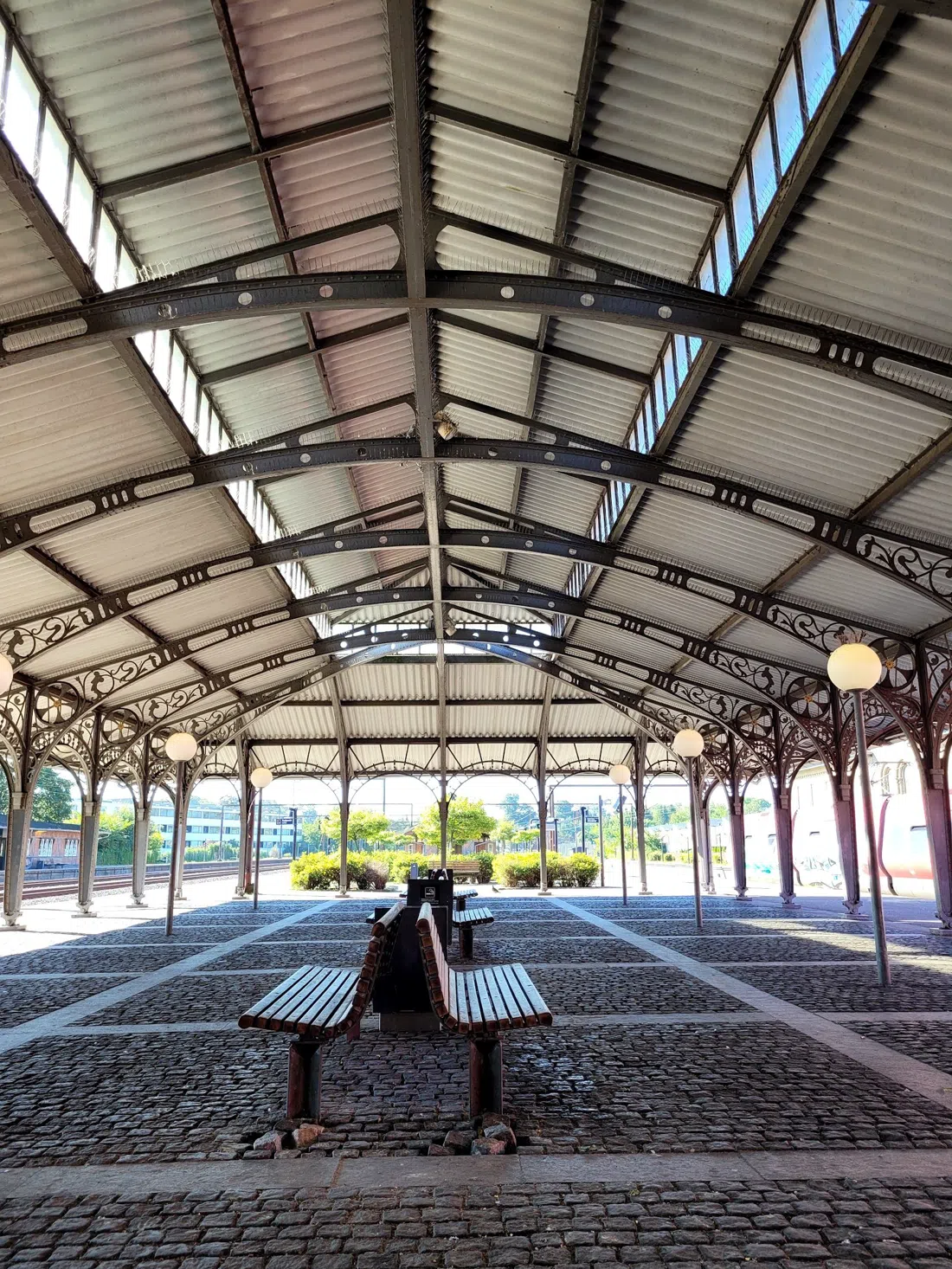
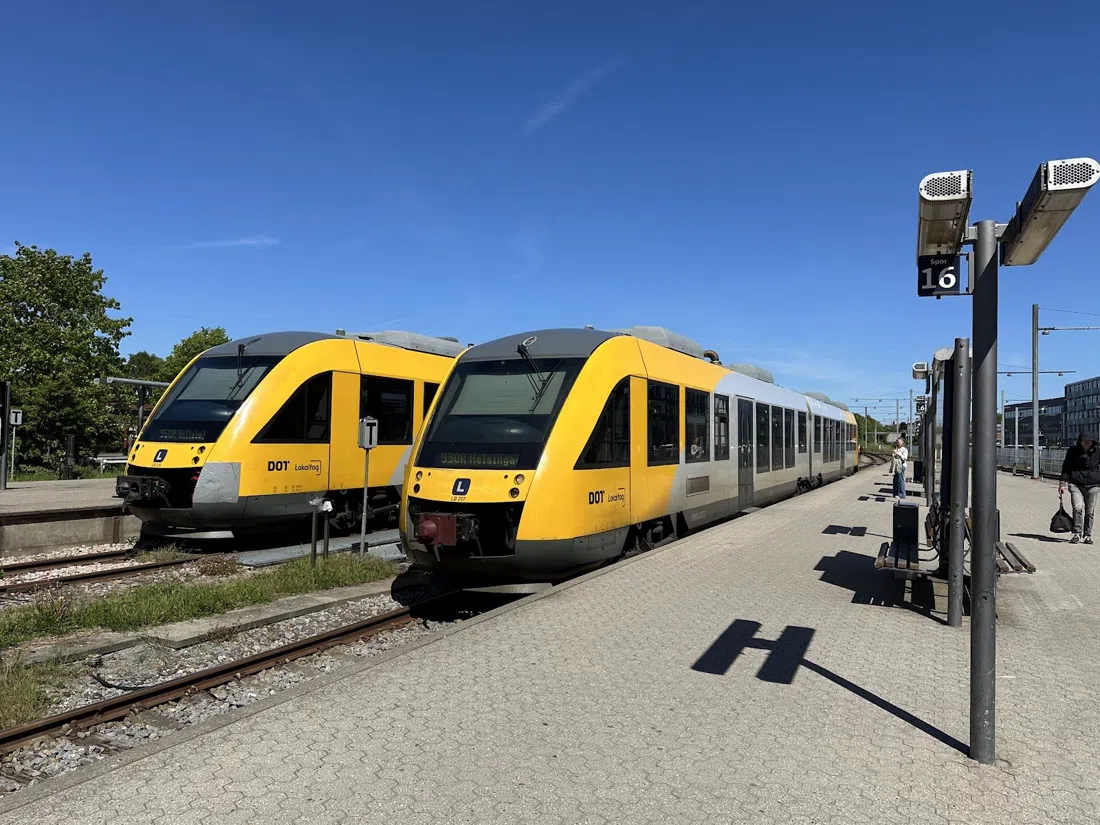
Hillerød Station (far end of line A) is about 35 minutes out and a 15-minute walk from Frederiksborg Castle, which sits on three lakes and charges roughly DKK 100 to 130 to enter, with a dedicated group rate. Fares from central Copenhagen run DKK 60 to 110 depending on ticket type. Two things to check before committing: a full station rebuild runs to the end of 2026, and the Lokaltog Gribskov line that also terminates here suffered a head-on collision on 23 April 2026, so look at Rejseplanen before relying on onward local services.
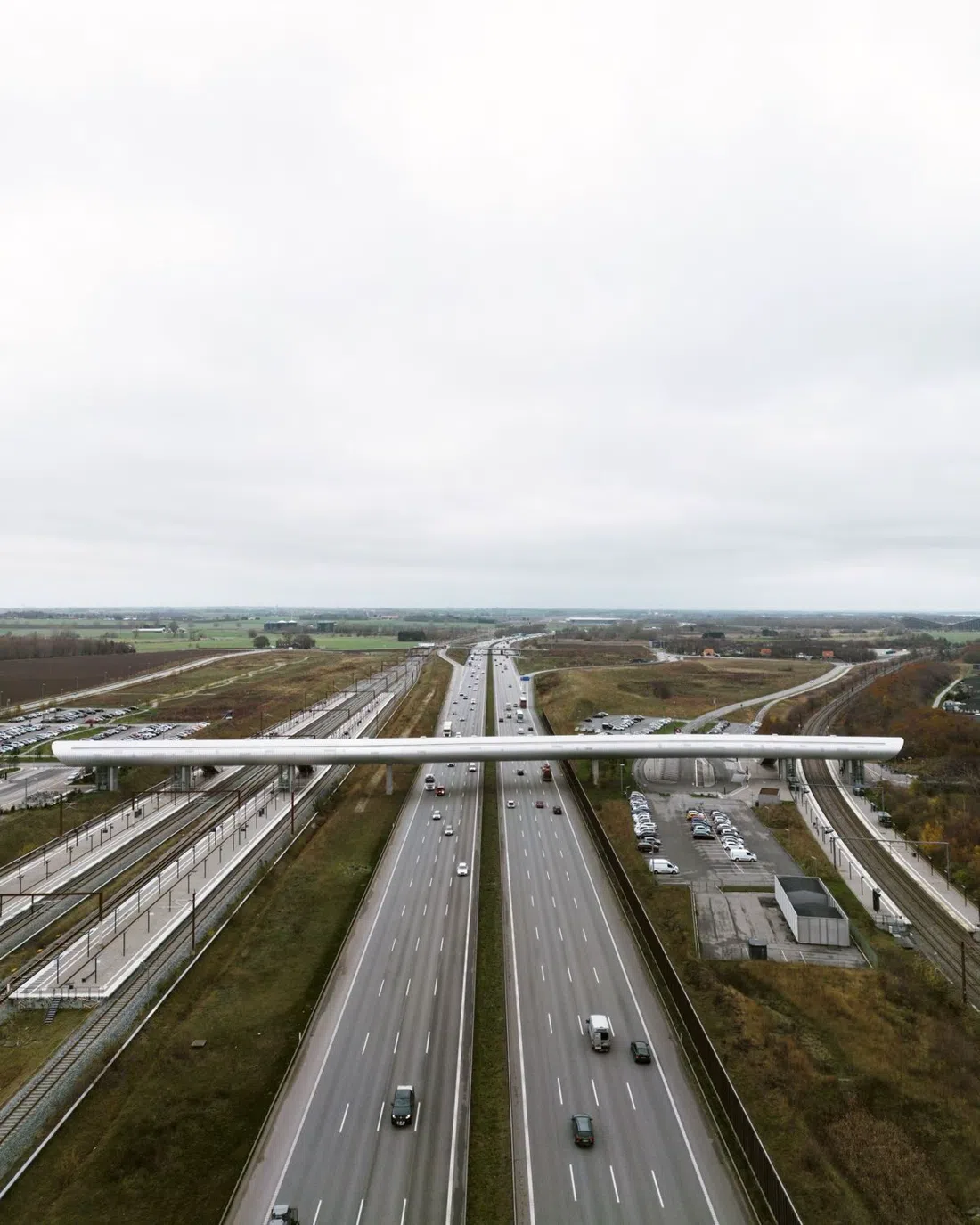
Køge Nord Station (line E, southern edge of the network) is here purely for the crossing itself. Cobe and Dissing+Weitling's 2019 bridge, nominated for the EU Mies van der Rohe Award, stitches high-speed rail, the S-train, park-and-ride and Denmark's busiest motorway into one 225-metre timber-lined tube. It is free, open at all hours, and about DKK 60 from the city. Go for the view down the infrastructure and then get back on the train.
Kystbanen (the Coast Line, regional rail up the Øresund shore) is a commuter service that happens to run one of the finest coastal views in northern Europe across its 14 stations. Get off at Humlebæk and walk ten minutes to Louisiana, which in 2026 is showing Sophie Calle, Lucian Freud and Arthur Jafa alongside the permanent Giacometti hall and the sculpture park above the water. Around DKK 120 return, entry about DKK 155, no reservations needed, and the museum takes group bookings in advance. Allow a full afternoon.
Crossing a border on a commuter ticket
Øresundståg (cross-border service to the Swedish side) runs every 15 to 20 minutes and carries roughly half a million journeys a week, driven almost entirely by the salary and housing gap between the two sides of the sound. It is about 35 minutes and DKK 100 to 120 one way, walk-on, no reservations.
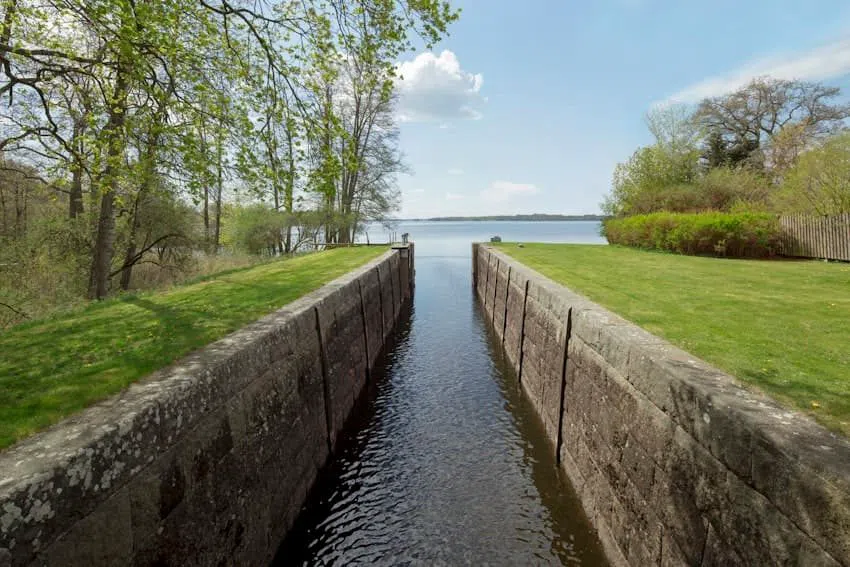
Be realistic about two things. Swedish ID checks are still in force at Hyllie, either on the platform or on board, so every member of your party needs a passport or national ID card. No exceptions, and a photo on a phone will not do. And frequency is capped at six trains an hour by platform capacity at Nørreport, Ørestad and the airport, so this is a busy train rather than a spacious one.
Practical notes
Tickets. One fare system covers boat, bus, metro and train, from about DKK 25 for two zones. If you are riding more than four times in a day, buy a City Pass Small (24 hours, around DKK 90) or a Copenhagen Card. Both include the harbour buses, which is the detail most visitors miss. Buy in the DOT or DSB app before you board; the boats have no ticket office.
Cash. Denmark is effectively cashless. Cards and phones work everywhere including Reffen's stalls, and several venues take nothing else. Do not go hunting for an ATM.
Timing. Harbour buses run a longer 2026 season, Easter to autumn half-term, with weekday sailings to 22:00 and weekend sailings to midnight. Outside that window the metro is your 24-hour fallback. Avoid the trains 07:00 to 09:00 and 15:30 to 17:30 with luggage, and reach Islands Brygge before midday on hot days.
Season. May, early June and September are the sweet spot: the boats are running, the harbour baths are open, and you are not queueing. July is warm and crowded; February is grey but Sandkaj still has swimmers in it.
Budget. A full day on the water and rails, with a meal at Reffen and a museum entry, lands around DKK 400 to 500 per person. Add an opera ticket and it roughly doubles.
Where to stay. Basing yourself near a harbour stop or a metro station on the M4 puts all of the above at your door instead of at the end of a journey. Start with a Copenhagen hotel search, and use our Copenhagen guide for the neighbourhoods and eating that fill in around these crossings.