The Copenhagen issue
Copenhagen by Bike: A Local's Route Through the City's Soul
A calm, honest, self-guided cycling itinerary through Copenhagen — from the orange Bicycle Snake to the coast — plus the hires and guided tours worth your money in 2026.
By Astrid HaugenCopenhagen neighbourhood by neighbourhood, on foot and by bike

Copenhagen doesn't reveal itself from behind a bus window. It unfolds at the pace of a bicycle bell — tyres hissing over Christianshavn cobbles, a harbour bridge swinging underfoot, a hundred commuters leaning as one into a green light. This is a city engineered to be ridden, and its best corners live in the quiet stretches between the postcards. What follows is not a checklist but a route through the city's soul, told at cycling pace, with the fitness levels, group realities and honest caveats you'll actually want before you unlock a bike in 2026.
First, the wheels: hire, e-bikes and the app option
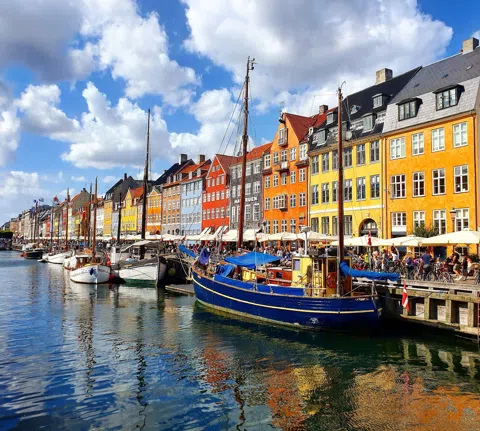
Before any route, sort your bike — and where you collect it decides how your first hour goes. If you're starting near the water, Copenhagen Bicycles (on the Nyhavn harbourfront) is the easiest walk-in in the city. The fleet is broad — city bikes, kids' bikes, cargo bikes and e-bikes — so you can kit out a whole group in one stop, and you roll straight from the door onto the Harbour Circle. Reckon on 110–150 DKK a day (£13–18); they run guided tours too if you'd rather not go it alone.
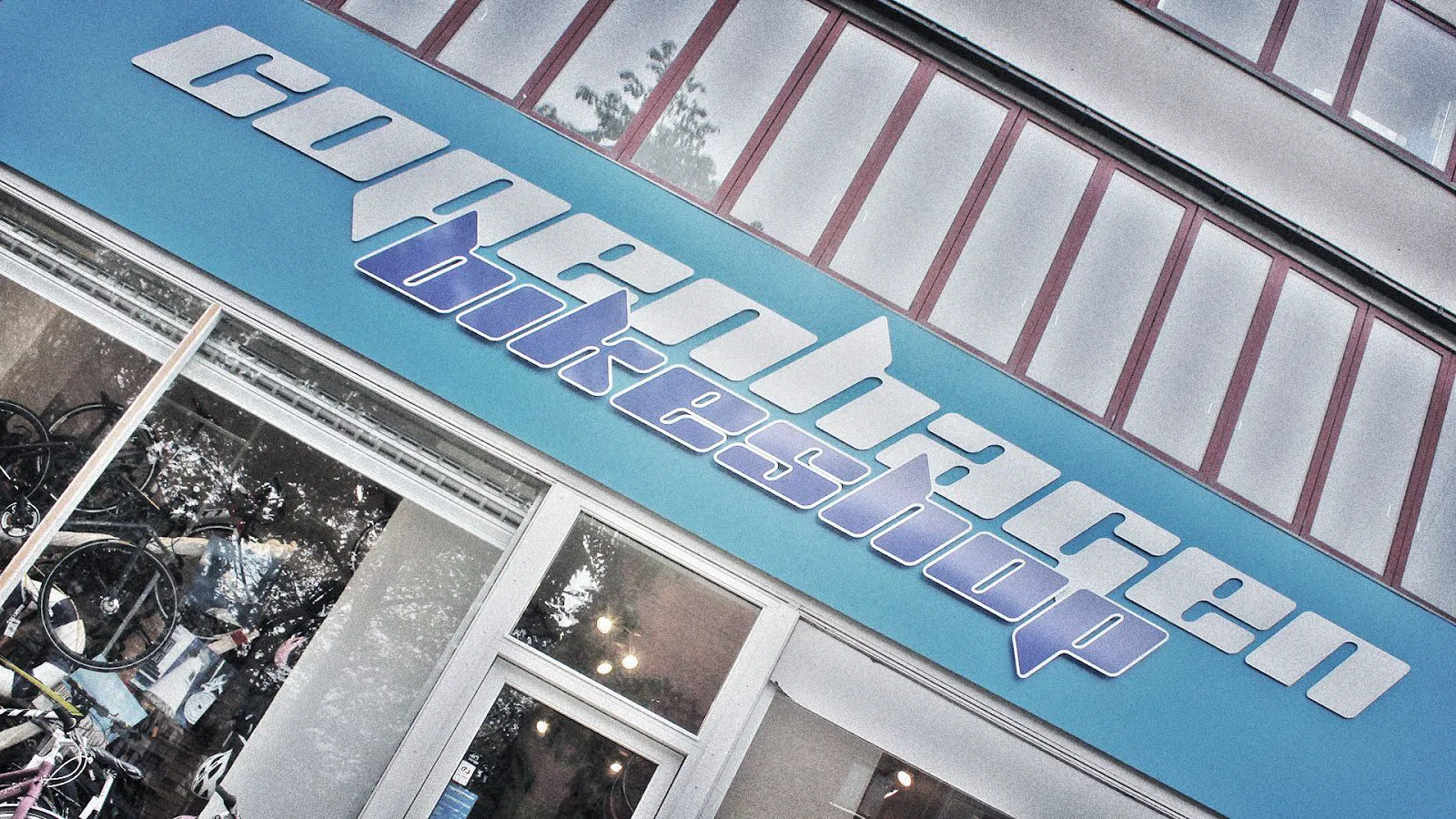
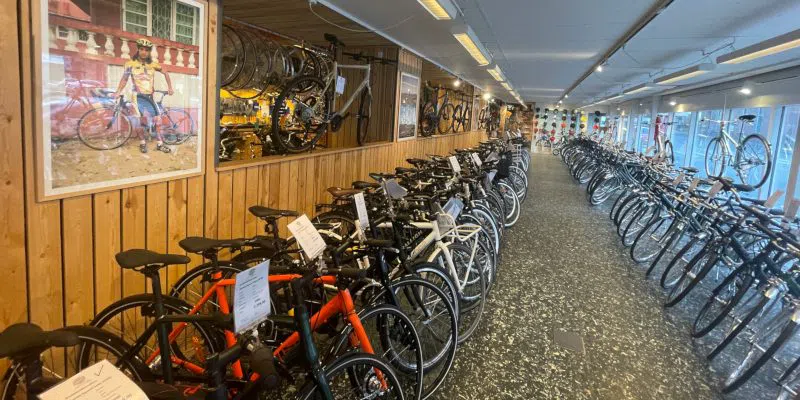
For something with a conscience, Baisikeli (a short push inland toward Dybbølsbro and Fisketorvet, on the Vesterbro side) is a certified B Corp social enterprise: cheaper at roughly 80–110 DKK a day (£10–13), with a genuinely good story and a wide range including cargo bikes for daily or longer hire. It's also the most sensibly placed shop for the Bicycle Snake and the harbour rides below.
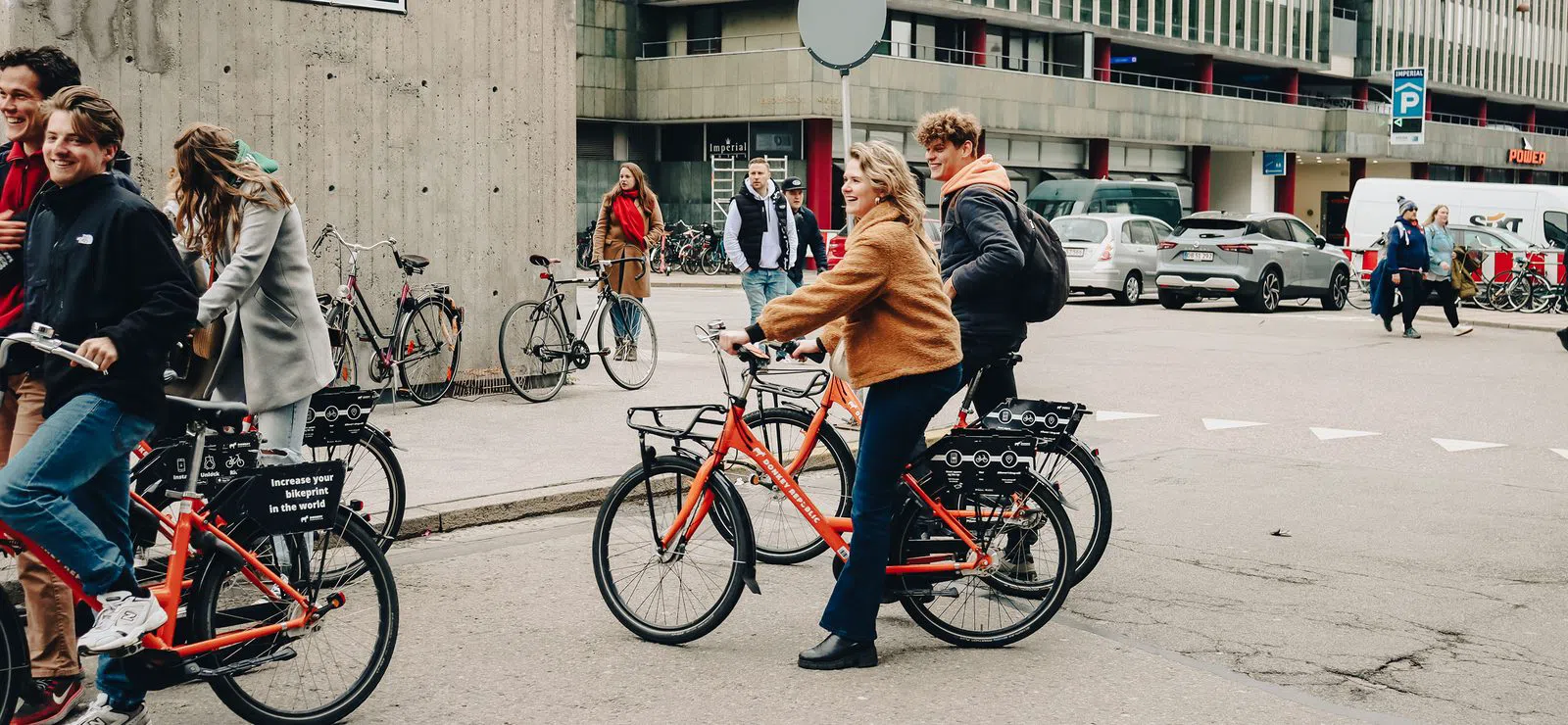
If you'd rather skip queues and shops entirely, Donkey Republic is the dockless, app-run bike share locals reach for on a whim — 30-plus pickup points, running 24/7, at 95 DKK a day or 1 DKK a minute (about £11/day). The catch, and it matters for groups: every single rider needs the app installed and a card loaded before you set off, so do that over coffee, not on a kerb with four people fumbling phones.
Plan your Copenhagen trip
Live prices from our booking partners.
Free cancellation on many rooms. We may earn a commission when you book.
The set-piece: the Bicycle Snake and the Harbour Circle
Every Copenhagen ride should touch the water, and the obvious place to feel why the city loves its bikes is Cykelslangen (the harbourfront between Fisketorvet and Islands Brygge). The Bicycle Snake is a 220m orange flyover that curls out over the harbour, cyclists only, and it's the single most photogenic stretch of the whole trip — the shot your friends back home won't quite believe. It carries around 12,000 riders a day, though, so this is not the place to stop dead for a photo: keep right, ride it single-file, and pull over at either end if you want the picture. It's free, it's infrastructure, and it swallows any size of group without fuss.

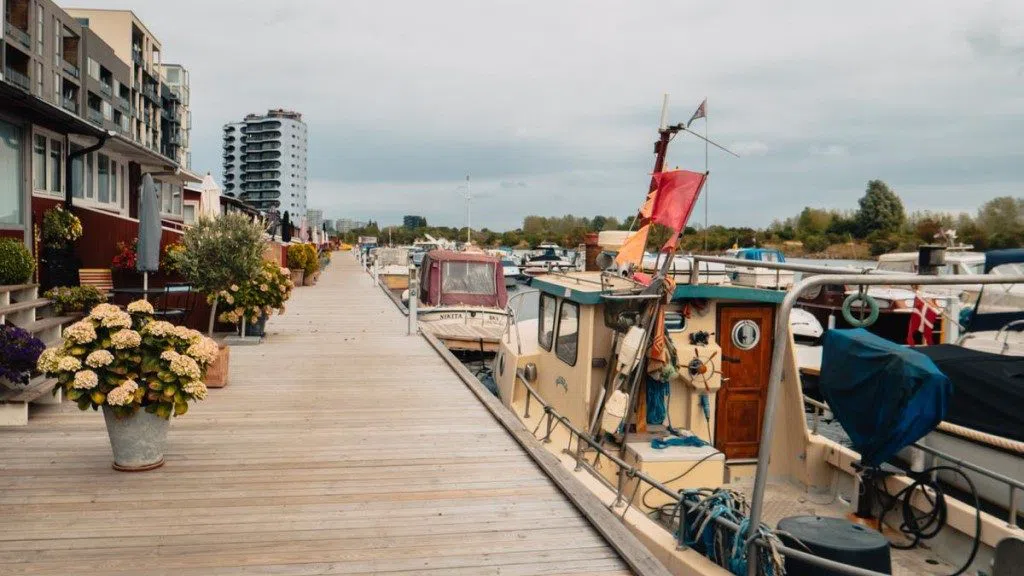
From there you're perfectly placed for the spine of any Copenhagen cycling trip: The Harbour Circle (Havneringen, looping the inner harbour). This is a 13km unbroken free route around the water, and it's the best single self-guided ride for a confident group — most guided tours simply hang off sections of it. Its real cleverness is that it breaks into 2km, 4km and 7km chunks, so a mixed-ability group can peel off and turn back early without anyone feeling they've spoiled the day. Ridden slowly with photo stops, the full loop is a relaxed couple of hours; ridden briskly it's under an hour, which tells you how flat and forgiving Copenhagen is.
Escaping the centre: coast rides for every pace
When the inner city has done its work, the coast is where Copenhagen widens out. The gentlest escape is the ride south along Amager Strandpark to Dragør (the Amarminoen path, out on Amager to the southeast). It's a wide, flat, near-traffic-free coastal route, beach on one side the whole way, and it's ideal for a relaxed group who want distance without hills. The old fishing town of Dragør at the far end is the natural regroup — cafés, a harbour, and a reason to dawdle before turning for home. Free the whole way; the only cost is coffee.
For fitter groups with a half-day and a taste for nature, ride north instead along Strandvejen coast to Klampenborg and Dyrehaven — the stretch Danes call their Riviera. It threads past beach architecture and bathing pavilions to Klampenborg, where the Dyrehaven deer park opens up in ancient oak and open grass. This is the standout day-trip for a UK reader who wants Copenhagen to feel like the edge of somewhere wild. The clever move: bikes travel free on the S-train, so you can ride out and take the train back from Klampenborg to halve the effort — a proper Danish trick that turns a hard day into an easy one.
The reward ride: Refshaleøen and Reffen
If I had to send you on one short ride with a payoff at the end, it would be out to Refshaleøen and Reffen (the reclaimed industrial island in the eastern harbour). It's a brief, flat pedal from the centre to Copenhagen's coolest post-industrial corner — old shipyard sheds, wide skies, and at the end of it Reffen, Scandinavia's largest open-air street-food market. It absorbs big groups effortlessly, which makes it a rare thing: a destination that suits a boisterous crowd of eight as happily as a couple. One honest caveat — Reffen is seasonal, running roughly spring to autumn, so a January ride out here is atmospheric but hungry. Time it for warmer months and it becomes the natural finish line to a day on the bike. Free to ride out; you'll only spend on the food and beer, which is rather the point.
If you'd rather be guided
Self-guiding suits confident riders, but a good local guide reads a city faster than any map, and Copenhagen has a strong field. The one UK visitors consistently warm to is Bike Copenhagen with Mike (Bike Mike Tours) — now in its 20th season in 2026 and genuinely, unfussily local. The small-group 'Hello Copenhagen' tour is the anecdote-led orientation to book on your first morning, and private group tours are bookable too. Two practical notes: it's English only, and it's cash — bring Danish kroner. Around 350–450 DKK (£40–50) including bike and helmet.
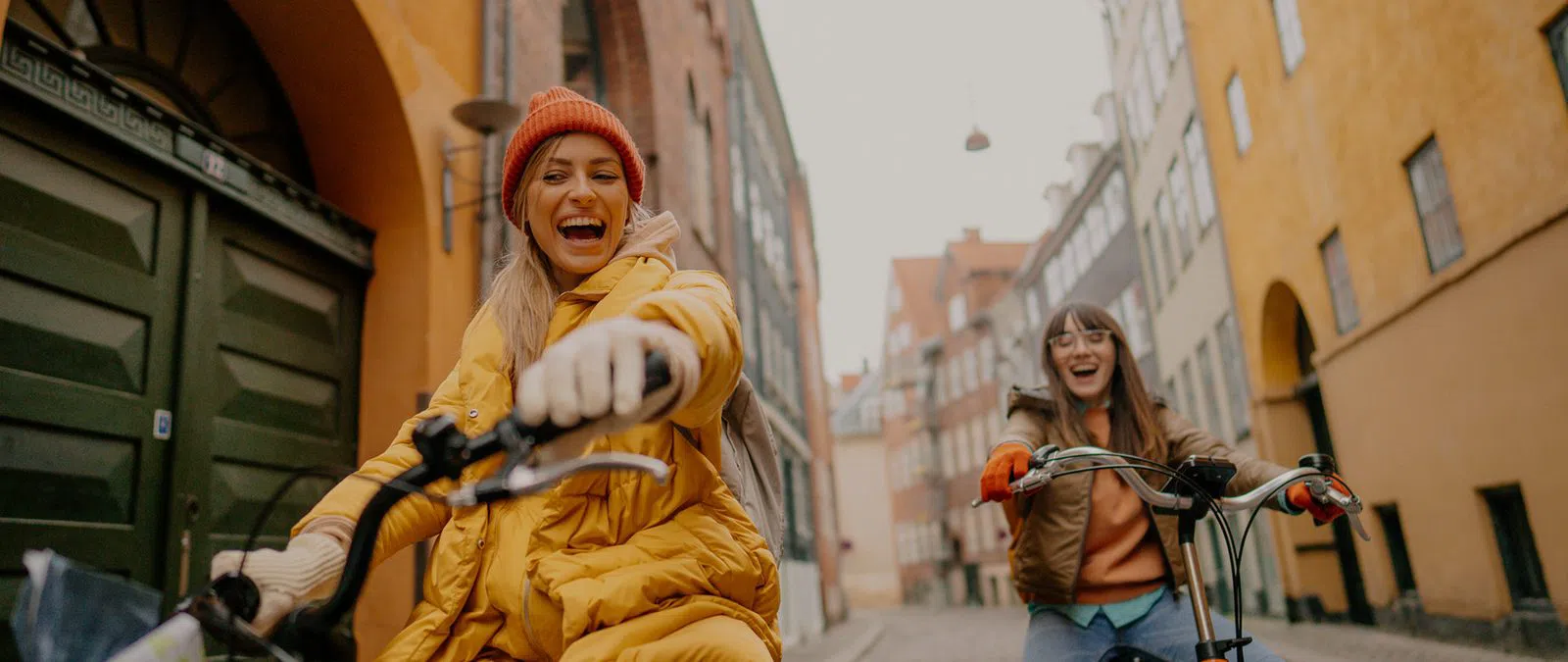
For a smarter angle on why Copenhagen cycles at all, Green Bike Tours is a non-profit built around how the city fights climate change. It's also the most group-scalable operator here, taking private bookings from two people all the way up to seventy-five, running Wednesday to Sunday over about 2.5 to 3 hours, from roughly £40 per person (ask for group rates). If your reason for coming is partly to understand the model — not just to see the sights — this is the thoughtful choice.
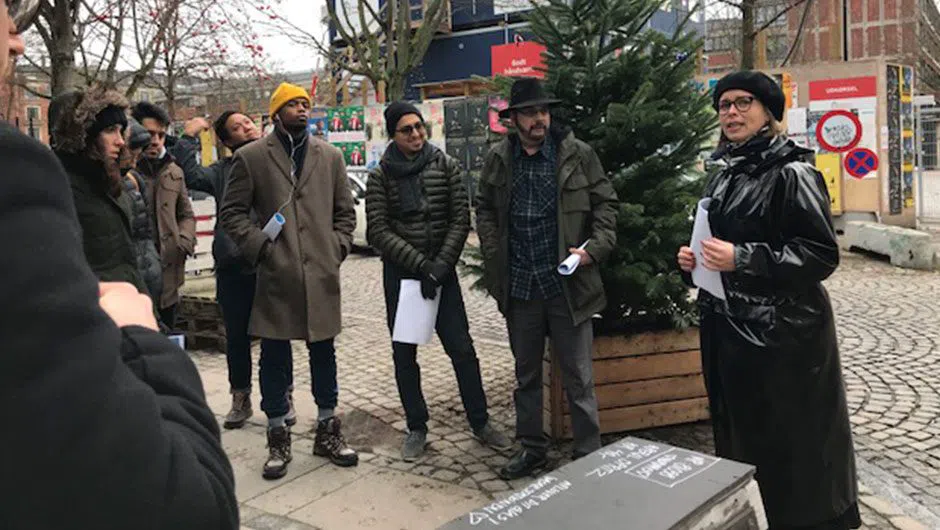
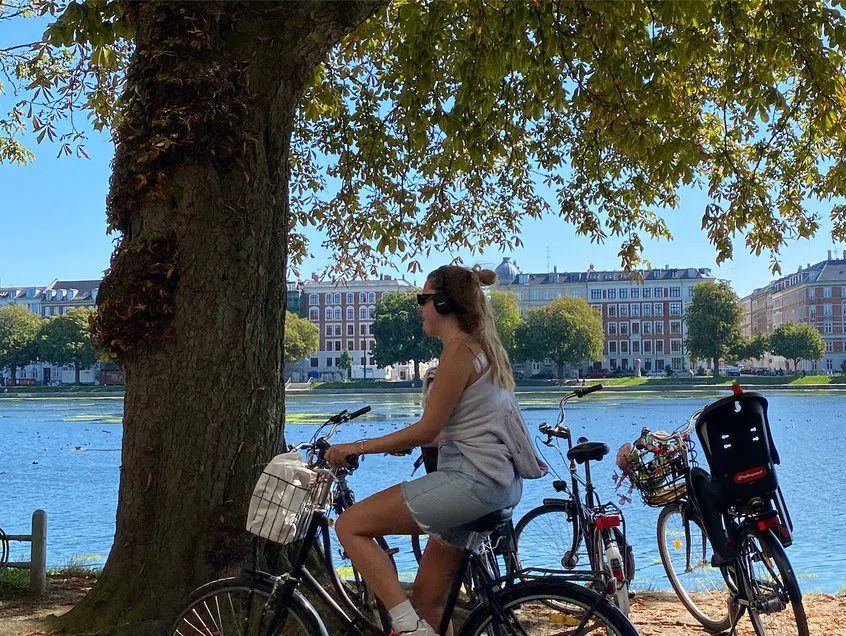
Groups who want to get well beyond the centre should look at Biking People, which builds private tours around your party — anything from a 3-hour city ride to a 6–8 hour trip out toward the coast and countryside, taking in architecture and landscape most operators skip. It's pricier at around £70-plus per person on the longer days, but for a group chasing a proper expedition rather than a lap of the centre, it earns it.
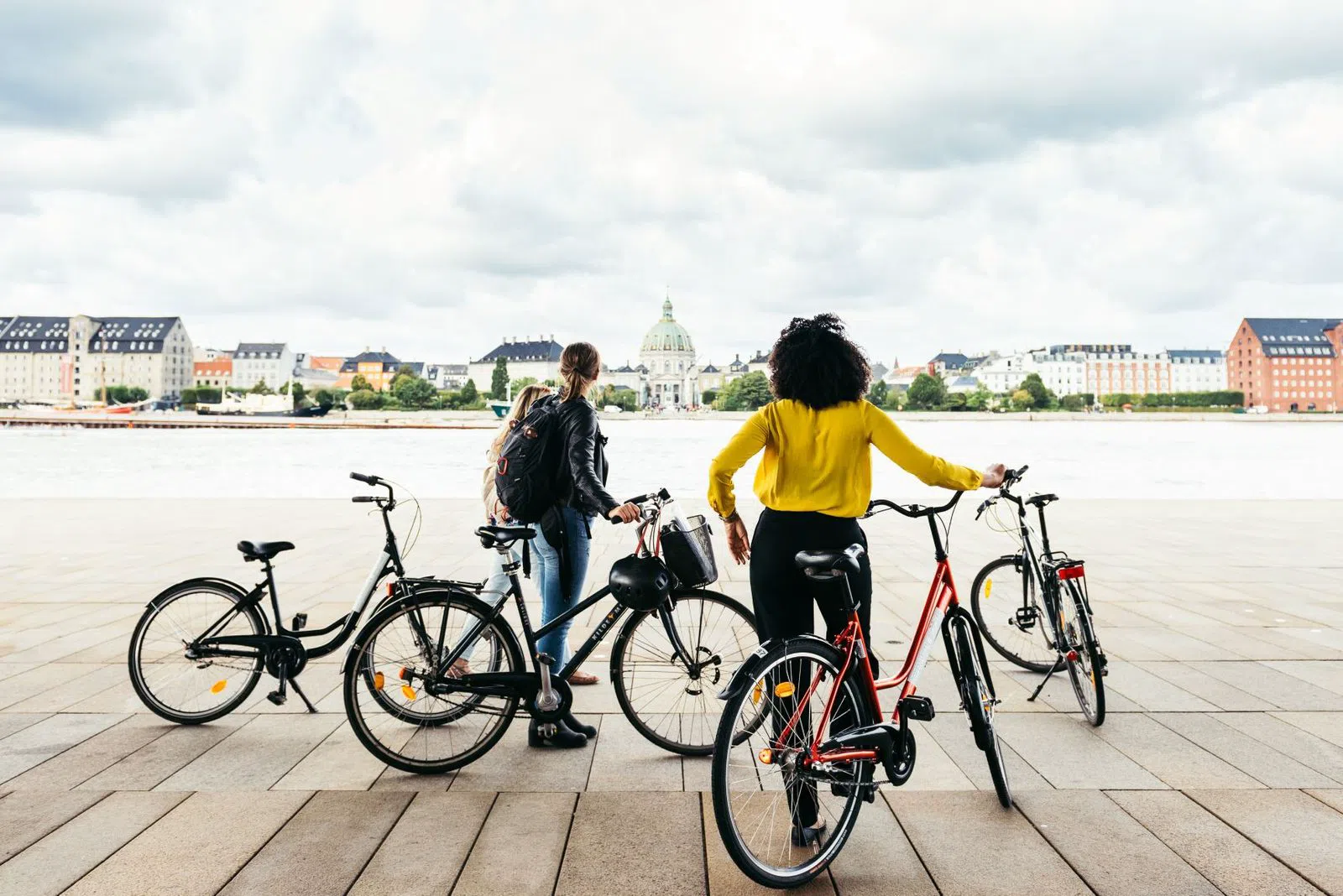
Foodie readers have their own obvious answer: Foods of Copenhagen — Culinary Bike Tour. It's a roughly four-hour small-group or private ride strung between real Danish food stops, smørrebrød and all, tastings included, for about £85–110 per person. Email ahead with your dates and numbers rather than expecting to drop in. It does the neat trick of giving you the city and its food in one relaxed afternoon.
And if you want a guided ride without committing to a private booking, Bike Copenhagen is the flexible fallback: daily 1, 2 and 3-hour guided tours with local guides at around 200–350 DKK, plus a full rental range from about 110 DKK a day. Its frequent departures make it the easy option for a drop-in group who decide over breakfast that today's the day.
Groups, couples and honest expectations
A word on who suits what, because the marketing rarely says. The free self-guided routes — the Snake, the Harbour Circle, the two coast rides and Refshaleøen — flatter groups of any size and any budget; nobody's checking a door, and the only etiquette that matters is keeping right and signalling. Reffen is the one genuinely group-friendly food stop, easy with a crowd. The guided operators split more clearly: Green Bike Tours scales largest, Biking People and Foods of Copenhagen lean toward smaller, more curated parties, and Bike Copenhagen with Mike is the warmest first-timer's introduction but strictly English-language and cash-only. Couples, honestly, do best self-guiding the harbour and coast and saving a single guided tour — Mike's or the food ride — for one morning. For where to base yourself, our Copenhagen hotel search covers the harbour and Vesterbro neighbourhoods these rides start from, and the wider Copenhagen guide rounds out what to do off the saddle.
Practical notes
Transport. You barely need public transport, which is the joy of it — but when you do, bikes ride free on the S-trains, the single most useful fact for the Klampenborg and coast rides. The Metro also takes bikes outside peak hours with a bike ticket.
Cash. Copenhagen is near-cashless and cards work almost everywhere, with one sharp exception that catches people out: Bike Copenhagen with Mike is cash only, so draw Danish kroner if that's your tour. Reffen's stalls take cards.
Timing and season. May to September is the sweet spot — long light, warm coast, and Reffen open. Shoulder months (April, October) are quieter and perfectly rideable in a jacket. Winter riding is entirely doable and very local, but the coast loses its shine and the street-food market largely closes.
Budget. A DIY day is cheap: a rental at £10–18, or Donkey Republic at about £11, and every route above is free to ride. Add a guided tour at £40–50, or a food-and-bike afternoon at £85–110, only where it earns its place. Two or three days on two wheels here costs less than a single big-ticket attraction elsewhere — and shows you far more of the city's soul.
Before you go
Do I need to hire a bike or can I use an app?
Both work. For a shop with a big fleet, Copenhagen Bicycles on the Nyhavn harbourfront (£13–18/day) or the ethical B Corp Baisikeli near Dybbølsbro (£10–13/day) are easiest. For no queues, Donkey Republic is dockless and app-run at about £11/day — but every rider must install the app first.
What's the best self-guided route for a first-timer?
The Harbour Circle (Havneringen), a flat, free 13km loop of the inner harbour that splits into 2km, 4km and 7km chunks so mixed-ability groups can turn back early. Link in the 220m orange Bicycle Snake (Cykelslangen) for the trip's best photo.
Are the rides suitable for groups, or better for couples?
The free routes — the Snake, Harbour Circle, both coast rides and Refshaleøen — suit any group size. Reffen's food market is genuinely group-friendly. Among guides, Green Bike Tours scales to 75 people; Foods of Copenhagen and Biking People lean smaller and more curated.
How do I get out to the coast or the deer park without a hard ride?
Ride north along Strandvejen to Klampenborg and Dyrehaven deer park, then take the S-train back — bikes travel free on S-trains, which halves the effort. For a flatter, gentler option, the Amager Strandpark to Dragør coastal path is wide, near-traffic-free and beach-lined.
When is the best time of year to cycle in Copenhagen?
May to September gives long light, warm coast and an open Reffen street-food market on Refshaleøen (which is seasonal, roughly spring to autumn). April and October are quiet and rideable in a jacket; winter riding is doable but the coast and food market lose their shine.